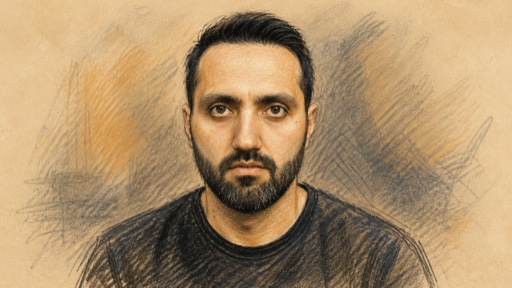
Miad Maleki
@miadmaleki · Pozorovatelé Íránu, jaderní experti a opozice
Miad Maleki je vedoucí výzkumný pracovník FDD, bývalý úředník amerického ministerstva financí pro sankce a veterán amerického letectva.
Nová dnešní opatření @USTreasury vůči Íránu a v oblasti boje proti terorismu, tři body, které stojí za zmínku: Za prvé, cíl v podobě směnárny ve Spojených arabských emirátech, malý hawalový obchod v Deíře registrovaný u Centrální banky SAE, byl sankcionován za finanční napomáhání Íránu, spolu se dvěma majiteli narozenými v Iráku, kteří mají kanadské a turecké pasy. Není to velká směnárna a právě v tom nejspíš spočívá smysl. Ministerstvo financí nyní jde po uzlech velikosti obchodních provozoven, které udržují tok íránských peněz přes Perský záliv. Za druhé, Katáib Hizballáh: operativci a krycí společnosti v Bagdádu, včetně firmy na „ochranné systémy“ a generálního dodavatele, plus finančníci Hizballáhu v Libanonu, kteří provozují směnárnu a obchodníka se zlatem. Za třetí, a nenápadně nejdůležitější: OFAC nyní uplatňuje předpoklad zamítnutí na všechny konkrétní licence související s Íránem, s výjimkou případů vyžadovaných zákonem nebo představujících riziko pro život, zdraví či bezpečnost životního prostředí. Předchozí vstřícné licenční politiky jsou pozastaveny, ačkoli předpoklad zamítnutí byl vždy pravidlem.
Přeloženo z jazyka angličtinaChuxin, kanál pro vypořádání obchodu mezi Čínou a Íránem, není licencovanou čínskou bankou, ale funguje jako banka a přinejmenším na papíře vypadá jako snadný cíl pro @USTreasury. @laurnorman z @WSJ o Chuxinu poprvé informoval loni v říjnu a @Reuters dnes přidala další podrobnosti. Uvalení sankcí by učinilo íránské prostředky v Číně ještě toxičtějšími, než už jsou, ale není to tak jednoduché a můj odhad je, že @SecScottBessent se ho pravděpodobně snaží odstranit prostřednictvím jednání. Háček je v tom, že americké ministerstvo financí nemůže zařadit na seznam tabulku. Musí jmenovat skutečnou instituci, která účty vede, což je krok, kterému se Washington vyhnul u kterékoli velké čínské banky. A protože jsou do toho zapojeny Sinosure a čínské ministerstvo obchodu, je to rána pro Peking, ne jen pro nepoctivého obchodního zprostředkovatele. Stručně: kupující jednající za Zhuhai Zhenrong, sankcionovaného čínského státního obchodníka s ropou, ukládá u Chuxinu každý měsíc stovky milionů dolarů za íránskou ropu. Chuxin pak platí čínským dodavatelům, kteří v Íránu budují infrastrukturu, a financuje účelově založený subjekt, který platí čínským vývozcům, údajně včetně dodavatelů vojenského vybavení. Není uveden v žádném čínském registru bank ani společností. Každoročně přes něj proudí miliardy dolarů mimo mezinárodní bankovní systém.
Přeloženo z jazyka angličtinaBývalý íránský ministr financí Tahmasb Mazaheri o íránských ropných fondech držených v Číně: „Tato aktiva nejsou zablokovaná — dokonce ani nespadají do kategorie zablokovaných aktiv. Jsou horší než zablokovaná. Západní země peníze zmrazí a oznámí, že je zmrazily. Když je uzavřena dohoda, peníze uvolní. Číňané však nestydatě peníze vezmou a nevrátí je. Říkají tomu ‚úschova‘. A ani po uzavření dohody je stále nevrátí. V nejlepším případě předají nějaké podřadné zboží za značně nadsazené ceny, a i to je spojeno s podmínkami, včetně úplatků a provizí pro jejich vlastní prostředníky.“ — 17. července 2015
Přeloženo z jazyka angličtinaThe naval blockade now has an aviation counterpart courtesy of @USTreasury. While this isn't a blockade in the legal sense and no aircraft is being intercepted, it does the same job through the financial system: it makes flying to, from, or for Iran very risky. Economically: Iran's airlines are hard-currency earners: ticket sales in dirhams and lira, cargo, and overflight fees. Now, U.S. have designated all 27 remaining Iranian airlines, plus Mahan Air's enablers in the UAE, Türkiye, the UK, Malaysia and Kazakhstan under powerful terrorism sanctions. Every bank, lessor, service provider or fuel supplier that touches them now faces secondary-sanctions risk, and for the industry Iran business is small and risky to begin with. Treasury also pulled several long-standing sanctions exemptions that quietly kept Iran's aviation sector connected to the world. U.S. companies can no longer pay Iran the fees airlines owe for crossing its airspace. The carve-outs that let Iranian planes get safety-related parts, fuel and emergency repairs abroad are gone. And foreign airlines can no longer fly Boeing jets, or Airbus jets built with American parts, into Iran without special permission from Washington. That covers nearly every modern passenger aircraft, so the routes linking Tehran to Dubai, Doha and Istanbul, Iran's main doors to regional trade and banking, are now on the line. Companies have until Sept. 23 to wind down.
The UK's new Iran sanctions restores the sectoral bans that EU lifted in 2016 as part of the Iran nuclear deal (banking, insurance, energy, metals, gold, software, shipping), and adds a power to sanction individual ships, and bans Iranian aircraft from landing in the U.K. What the U.K. new Iran sanctions mean; on paper, a lot but in practice, it depends on enforcement. UK-Iran trade is negligible and US secondary sanctions have kept British firms out for years. The marginal bite is the UK nexus: Lloyd's insurers and P&I clubs, sterling clearing, UK-flagged tonnage, software exporters, and the regime's sanctions evader based in London. Without OFSI/FCDO investigations, actions and penalties, this is a positive press release with a statutory instrument number. Iranian banks in London. Melli Bank plc, Persia International Bank plc and Bank Saderat's UK arm were already asset-frozen on 29 September 2025; Bank Sepah International returned under the UN listing. Their wind-down licence expired in November. Today changes little for them since they are frozen shells.
The 30 million barrels that @SecScottBessent says Iran has left, sounds like a lot until you price it. After multiple intermediary rip-off cut, sanctioned freight, months of floating storage, Ship-to-Ship transfers, and yuan conversion, the regime nets perhaps $50–75 a barrel, call it $1.5–2.3 billion in total, about a month of pre-war oil income. And unlike pre-war, there is nothing behind it: no laden Iranian tanker has cleared the blockade since mid-July. Every barrel still afloat has already carried two to three months of shadow-fleet costs, and none of it can be replenished.
Here is how Iran’s foreign trade actually clears at the macro level, and which nodes @USTreasury and @CENTCOM are hitting. See the chart and here is a summary: 1.Tehran allocates crude to trustees: the IRGC/armed forces’ oil commands, bank-established “rahbar” companies, CBI-licensed exchange houses (sarrafis), and private traders. 2.They sell it abroad through foreign front companies, take payment into those fronts’ accounts at banks in the UAE, Hong Kong/China, and Türkiye, keep the proceeds there, and pay for Iran’s imports out of those same balances. 3.Only oil, goods, and payment instructions cross the border; the physical movement of foreign exchange is minimal. 4..At home, the central bank’s platform clears claims on that offshore money in rial. That is how Iran can report a 117% “currency return” ratio while the CBI itself puts unreturned export proceeds since 2018 at $81 billion, against a raw export-return gap of about $130 billion. The 117% covers March–August 2026, when the blockade had collapsed exports: with a shrunken denominator, modest returns show up as a huge percentage. The CBI’s best-looking number is itself a measure of the blockade’s impact. CENTCOM’s naval blockade has cut the physical leg, while Treasury has designated the trustees, the sarrafis and rahbars, and, since August, sanctioned the foreign host banks.
(3/3) The precedent is the UAE. Abu Dhabi supplied 30% of Iran’s imports ($21 billion in 2024). On August 18 it halted all trade and financial dealings with Tehran. Its U.S. trade hit $39 billion in 2025 with a $1.4 trillion investment pledge. Türkiye’s private sector already knows the answer and we’ve seen thus play out. In 2019 Tüpraş cut Iranian crude to zero when U.S. waivers lapsed; Iran had been 47% of Turkish oil imports. Halkbank just agreed to bar Iran transactions and its stock jumped 10% on the news. Iran’s 25-year gas contract with Türkiye expired July 31 with no renewal talks. Iranian gas was 13% of Turkish imports in 2025. BOTAŞ has already started replacing it with LNG from the U.S., Mercuria, Woodside, ExxonMobil and Shell.
(2/3) The U.S.–Türkiye trade relationship is nine times larger and growing while the Iranian one contracts. U.S.–Türkiye trade in goods and services: $48.9 billion in 2025, up 14% in a year. Türkiye–Iran trade in 2025: about $5.5 billion, and shrinking. Erdoğan and Trump have set a $100 billion trade target. Turkish Airlines just signed a $30 billion Boeing order. BOTAŞ signed 20-year LNG deals anchored in U.S. gas. None of that is compatible with being the Revolutionary Guard’s cash-and-gold window.
(1/3) @USAMBTurkiye is right: @USTreasury’s action against Türkiye’s Golden Global Bank is about one institution, not about Türkiye. But the bigger picture here is the choice it puts in front of Ankara and the numbers make that choice clear and easy. Every one $ of black-market Iran business puts $9 of legitimate U.S. business at risk in Türkiye. The Turkish market has made its preference clear and Ankara should follow it with an understanding that there will be at least another two years of this US policy, and in the long run, more Iran business means less US investment as long as IRGC rules in Iran. (1/3)
Why today's @USTreasury action against a Turkish bank matters more than the target's size suggests. Golden Global Yatırım Bankası is small: licensed in 2019, two Istanbul branches, ~$500M in assets. But it grew 57% last year, multiplied its capital 11x, and sold $30M of dollar sukuk just four months ago. A tiny new bank growing that fast is either a great story or a laundromat. Here, Treasury says it was the latter. It is also the first bank in a NATO ally hit under Operation Economic Outcast, Treasury's Iran campaign, and it comes a week after Egypt's Banque Misr UAE was cut off from U.S. banks. Secretary Bessent promised more every week. As Gulf channels close, Türkiye is the displacement route, and its banks will de-risk fast. What did Golden Global do? Treasury says it was built to move Iran's China oil revenue into Türkiye for conversion to cash and gold, and to bank proxies of the IRGC's Qods Force in the network of Sitki Ayan, the Erdoğan-linked oil trader OFAC sanctioned in 2022. Leaked records on @WikIran show the plumbing. Between November and December 2021, Baslam Nakliyat, Ayan's sanctioned front, sent €12M in six SWIFT payments into Golden Global shell-company accounts under "crude oil sale" assignment letters. Golden Global cleared the euros through Russia's Transkapitalbank, itself sanctioned months later for helping banks evade sanctions.
“The EU welcomes efforts at ensuring that Iran ceases its destabilising activities and engages in peace negotiations with good faith, also through additional economic pressure, including through the US led Operation Economic Outcast.” This was a major accomplishment by @SecScottBessent. The EU has existing sanctions, that are not enforced, that could target the regime’s land route to Europe, its trade with Türkiye and the hard currency it earns there, and its trade with the EU itself. 1. With Hormuz shut, the Bazargan–Gürbulak crossing into Türkiye is Iran's main land gateway to Europe: 200,000+ trucks a year, up 60% by Tehran's own count to 320 a day. Every load that reaches the EU border in Bulgaria or Greece falls under EU customs and EU sanctions law. 2. Iran–Türkiye formal trade was $5.7 billion in 2024. Iran sold Türkiye 7.8 billion cubic metres of gas in 2025 (13% of Türkiye's imports) and 34% more in the first half of 2026: Tehran's last major European energy market and a foreign-currency lifeline as oil exports collapse. 3. €3.7 billion in 2025: €3 billion of EU exports (machinery, chemicals) and €760 million of imports, led by Germany (€1.2bn), Italy and the Netherlands, plus about €1.6 billion in services. That trade runs on euro banking channels, and Bank Melli's Hamburg branch, frozen under EU law, is still open.
What keeps the Islamic Republic's shadow banking network, the so-called rahbar network, running is not clever financial engineering. It is people: trusted individuals and a handful of sarrafis, the currency brokers who serve as the regime’s gateway to the global financial system. Just as IRGC soldiers carry out the regime’s repression at home, these businessmen and trustees carry the responsibility for funding its terrorism at home and abroad. Without them, Tehran could not move a single yuan out of its accounts in China or buy a single dollar or euro in Dubai or Istanbul.
The Islamic Republic is trapped in a strategic corner of its own making and every escalation should be read as a bid, not a battle plan. The regime is bidding for the one commodity it cannot produce domestically: sanctions relief packaged as American eagerness. Economically, it can only "resist," substituting an inflation tax for outright payroll default while its revenue base collapses. Diplomatically, its only remaining play is escalation designed to drag the United States back to the table and manufacture pressure inside Washington for talks. Politically, it needs a deal, but a deal it can sell to the only constituency it has left: a support base that has shrunk to its most radicalized core. That base, the narrowest in the regime's history, is precisely the audience least willing to accept the concessions any real deal requires. The corner is therefore self-tightening: the more isolated the regime becomes at home, the more it must escalate abroad; the more it escalates, the harder the deal it needs becomes to sell.
Do you remember ISIS? It ruled 12 million people for five years on a $2 billion war chest. The world built a 90-member coalition to erase it. The Islamic Republic has run the same project for 47 years on a trillion dollars of oil; with embassies, a UN seat, a nuclear program and a central bank. At least 1,639 hanged in 2025. At least 5,000 political prisoners executed in one summer in 1988. ~1,500 protesters killed in two weeks in 2019, and 10s of thousands in two days in January. It shut down internet to the entire country for close to two months while slaughtering civilians. ISIS filmed its executions. IR's propagandists stand outside the White House making sham interviews. IR is ISIS with a central bank and 90 million hostages: young, educated, and among the most pro-Western societies on earth.
The regime can keep printing rial to avoid cutting salaries but it can’t print gasoline, or refining catalysts. Printing buys time but salaries paid in melting rials still can’t buy imports that no longer arrive. Regime is inflating away payroll cut but can’t inflate away empty fuel tanks. Regime’s Economy Minister admitted ~100 trillion tomans borrowed directly from the central bank in March–May alone. Monetary base up 61.5%. Inflation near 90%, food at least at 134%. Why? Because Iranians have absorbed high inflation (though nowhere close to the current rates) for decades, but a stopped paycheck is a different animal: a common date, a common grievance, an obvious culprit. Unpaid salaries would trigger strikes.
For China, Iran isn't a serious partner but a cheap hedge against Washington. A Chinese official told me once, "it's been more of a liability." China's trade in 2025: - United States $575B - Saudi Arabia $108B - UAE $108B - Iran $10B ($41B if you add the Iranian crude Beijing doesn't book). Iran depends on China for ~90% of its oil exports and over ~50% of its imports (UAE transshipped added) China depends on Iran for ~12% (much lower now) of its crude imports and 0.2% of its exports.
The Islamic Republic has pushed capital out of Iran since its inception First, and since 1979, it pushed Tehran and Kish's future to Dubai. Kish was designed to be the Persian Gulf's Singapore. Today it handles fewer than 1 million shipping containers a year. Jebel Ali handles 15.6 million, and its free zone did $190B in trade last year. Now, by closing Hormuz, it's pushing what's left to Fujairah and the Saudi Red Sea coast: • DP World, July 22: two new Fujairah terminals, +2.5 million containers and 3.6 million tonnes of cargo, 50-year deal. • UAE, May 2026: fast-tracked ~$3B pipeline to double crude capacity to Fujairah by 2027. • Saudi Arabia, July–Aug: $170M + $267M + $434M in Jeddah packages; Petroline at 7 million barrels per day to Yanbu, bypassing Hormuz entirely. Meanwhile Jebel Ali is at ~10% of normal, Bandar Abbas is under US blockade, and Iran's entire 2025 Foreign Investment was $1.65B (which it's probably not even true), less than a single Saudi port contract.
A ~USD 6 billion UAE bank with only three U.S. correspondent lines is moving roughly a third of its balance-sheet-equivalent per year in suspected Iranian shadow-banking flows; cutting those three lines is a low-cost, high-impact way to sever an Iranian access node to the USD.
On Monday @SecScottBessent said every foreign branch of Iran's Bank Melli must be shut down. Bank Melli is the biggest, but not the only one: Saderat, Mellat, Tejarat, Sepah, EDBI and a handful of smaller Iranian banks, all subject to @USTreasury, also keep branches, subsidiaries and joint ventures abroad. 45 units in 27 jurisdictions. Melli is 11 of them, Saderat another 11. 22 still operating, most restricted or under pressure. 14 frozen or dormant. 5 dead (liquidated, licence revoked, never opened). Europe holds 15 units and 13 have been frozen, non-trading or under administration since the EU and UK re-imposed sanctions on 29 Sept 2025. London alone has four Iranian banks sitting on about €1.06bn of assets and €738m of equity, all still holding UK banking licences, none doing new business. The Gulf is where doors are still open: 16 branches in the UAE between Melli and Saderat, plus Oman, Qatar, Turkmenistan and Uzbekistan. That is what the UAE might cut-off. The only growth is east: Moscow, Minsk, Yerevan, Baku.
(17/17) On "there is no doubt this campaign will hurt Iran and its economy. But it will almost certainly fail to force Tehran's surrender." The essay concedes the mechanism and then rejects the conclusion by moving the goalpost to "surrender." Read together, the piece says: pressure hurts Iran's economy; pressure pushed Iran to accept the JCPOA; pressure pushed Iran to pause its nuclear program under Bush; pressure — combined with U.S. naval engagement — pushed Khomeini to end the Iran-Iraq war; Iran acknowledges that it needs sanctions relief. The 1988 concession is the decisive one. The essay acknowledges the regime accepted a deal it had refused for twelve months because converging military and economic pressure made refusal more costly than acceptance. That is exactly the argument for the current strategy. The essay is refuted by its own historical citations. It concedes pressure worked in 2003, 2012, and — most importantly — 1988, then declares it cannot work in 2026 when applied more comprehensively than in any of those cases. The one who was optimistic about pressure isn't the current administration but it's in fact Khomeini in 1988, quietly telling the world how the calculus actually runs.
(16/17) On "the war… finally imposed consequences on the American public when Iran closed the Strait of Hormuz and targeted Gulf energy infrastructure." The costs of Iran's escalation land primarily on the actors who accommodated the regime not on Americans. Gulf states whose ports, refineries, and shipping insurance Iran targeted — the same states that hosted Iranian evasion networks, took Iranian tourism, ran the Dubai exchange-house corridor, and lobbied Washington to soften pressure. China, whose teapot refiners took ~90% of Iranian crude, whose banks hold most of Iran's ring-fenced yuan balances, and whose Hormuz maritime lifeline is exposed to the exact instrument Iran itself is threatening. Europe and Asia — India, South Korea, Japan — most exposed to Gulf energy disruption through insurance, reinsurance, and direct import dependence. The U.S. is a net energy exporter. U.S. gasoline prices reflect global crude, but U.S. exposure to a Gulf shock is a small fraction of Europe's or Asia's. Meanwhile a U.S.-led corridor kept roughly 10 million b/d moving. The countries paying the highest price for the current disruption are the ones that spent the last decade financing, hosting, or accommodating the regime that is now disrupting them.
(15/17) On "[sanctions] have mostly failed to effect the policy changes they were designed to drive." This is the essay's central conceptual error. Nate, my friend, you know should better. Sanctions are not a standalone instrument for producing "policy change." They are one part of a coercion toolkit that includes military credibility, diplomacy, allied enforcement, coalition-building, and a defined off-ramp. The piece first attacks sanctions for not doing what only the whole toolkit can do, then attacks the current campaign for using more of the toolkit; blockade, regional enforcement, secondary sanctions, snapback. Its own examples refute it. The 2003 nuclear pause happened under converging military pressure post-Iraq invasion plus economic pressure. The JCPOA was accepted under converging 2012 CBI/oil sanctions plus a credible military threat plus a snapback structure. 1988 happened under converging U.S. naval engagement plus a collapsed war economy plus battlefield defeat. The essay even concedes: "Pressure helped push Iran to temporarily pause its nuclear program during George W. Bush's administration and, later, to accept the JCPOA." That's a concession that pressure works. The rest is a redefinition of "work" as "regime collapse without other instruments," a definition no coercion theory has ever accepted.
(14/17) On Iran having "discovered that the United States has no appetite for sending ground troops into its territory." This is not a new discovery. It has been the regime's operating assumption for 47 years but mostly after Iraq war (Zaria said this a million times). No serious plan has ever contemplated a U.S. ground invasion of Iran as the piece itself notes, that is exactly why the IRGC proxy network was built. What's new is that pressure doesn't require invasion. The 2026 campaign proves it: strikes decapitated the command, a blockade throttled trade, the UAE cutoff sealed the corridor, Europe's snapback closed the multilateral rear window; all without an American boot on the ground. The bitter irony: the very administration whose approach the piece defends refused to enforce existing economic sanctions out of fear of escalation. The lesson Tehran drew from 2021–2025 wasn't about invasions but was that Washington would voluntarily unplug its own tools. Nobody was going to invade Iran. Everyone has always known that. The interesting question is whether Washington will use the tools it has and the previous four years were the years it refused to.
(13/17) On the Islamic Republic having "learned that it can survive massive U.S. and Israeli airstrikes." This repeats the regime's own propaganda. The people making the "we survived" claim are, in large part, dead: — Hossein Salami, IRGC commander — killed June 13, 2025. — Mohammad Bagheri, chief of the armed forces — killed the same day. — Ali Shamkhani, former SNSC chief — targeted; initially reported killed. — Multiple senior IRGC commanders and nuclear scientists eliminated in the first hours of the war. Physical capabilities that took decades to build — missile and drone stockpiles, air defense architecture, naval assets, nuclear infrastructure at Natanz, Fordow, Isfahan — are gone. The officials who can still claim survival are the ones who happen to be alive to claim it, a survivor's fallacy. And no serious planner has ever suggested an airstrike campaign, no matter how effective, could eliminate a sitting government from the air. The right metric is what the regime can still do. On that metric: air defenses gone, top command gone, Hezbollah gone, Hamas leadership gone, nuclear infrastructure struck. That is not survival by any measure but actually the definition of degradation.
Související články
- U.S. Sanctions 36 Targets Supporting Iran’s Aviation Sector
- White House Says Iran Naval Blockade and Economic Pressure Remain in Force
- U.S. Sanctions Turkish Bank Over Tens of Millions in IRGC-QF Transactions
- Bessent Says EU Has Officially Joined U.S. Iran Pressure Campaign
- Pezeshkian Asks Modi to Help Move Iran War Back to Negotiations
- China Says Cooperation With Iran Should Not Be Disrupted by U.S. Sanctions
- Iran and Oman Propose Joint Hormuz Corridor and Mine-Clearing Project
- Two Tankers Cross Hormuz, Lowest Commodity-Vessel Tally Since Early May
- U.S. Officials Confirm Navy Cleared Hormuz Median Shipping Lane
- Iran Says Hormuz Corridor Deal Does Not Reopen the Strait
- CENTCOM Says U.S. Cleared Iranian Mines From Strait of Hormuz Lanes
- U.S. Officials Say 20-30 Tankers Cross Hormuz Nightly Under Military Cover