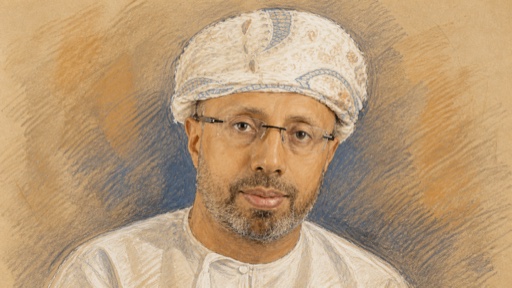
Abdullah Baabood
@abaabood · Think tanks & analysts — US/UK
Abdullah Baabood is an academic specializing in Gulf politics, international relations, and Middle Eastern affairs.
Israeli incitement against Qatar... political escalation on the one-year anniversary of the aggression
Translated from Arabic10/10 Finally, I believe that Dr. Eric Wargotz's article presents a critique of Oman driven by political and ideological motives, along with clear analytical selectivity. The charged language reveals his bias and the ideological framework governing his discourse, ultimately leading him to a twisted argument and misleading conclusions.
Translated from Arabic8/10 The real failure is not in Omani diplomacy, but in the absence of an effective collective regional security system capable of protecting navigation, without the Gulf states finding themselves hostage to a conflict started by others while they themselves pay its price.
Translated from Arabic7/10 Oman is also not desperately trying to “save its maritime economy,” as the article claims. It has broader regional and strategic reasons for keeping Hormuz open: Gulf stability, global trade, energy security, and preventing an international waterway from becoming a permanent war zone.
Translated from Arabic6/10 Oman’s negotiations with Iran should not be portrayed as though they constitute an Omani recognition of Iran’s sovereignty or its unilateral control over the Strait of Hormuz. Neither political rhetoric nor claims change Oman’s position. Muscat’s goal is clear: to open the strait and ensure the safety of navigation.
Translated from Arabic4/10 The article jumps to a major causal conclusion: negotiations, >Iranian demands>, American strikes>, then escalation. But the sequence of events does not mean that one caused the other. The confrontation, sanctions, military operations, and threats to navigation preceded Omani diplomacy and created the need for it, not the other way around.
Translated from Arabic3/10 Dialogue with Iran does not mean that Oman has sided with it. Oman and Iran are the two states bordering the Strait of Hormuz, and restoring navigation, clearing mines, and organizing maritime services necessarily require communication between them. Geography is not political alignment.
Translated from Arabic2/10 Saying that Oman “played both sides” until its neutrality collapsed turns the truth upside down. Oman did not negotiate with Iran and thereby cause the Hormuz crisis; rather, it negotiated because the strait had already been paralyzed as a result of the war and confrontation provoked by others.
Translated from Arabic1/10 The article suffers from analytical selectivity and clear political and ideological bias, and conflates the sequence of events with their causal relationship, thereby holding Omani diplomacy responsible for a crisis it did not create. This is an attempt to correct some of the fallacies and place Oman’s role and its negotiations regarding the Strait of Hormuz in their proper context.
Translated from ArabicA welcome and long-overdue step. But it should be only the beginning. More countries must join, and sanctions must expand until illegal settlements and annexation end and Palestinian rights are respected.
1/9 The claim that Oman “played both sides” until its neutrality collapsed gets the story backwards. Oman did not negotiate with Iran and thereby create the Hormuz crisis. It negotiated because Hormuz was already paralysed by war and confrontation. 🧵
A good start, but sanctions must go further. Israel cannot violate int. law, commit genocide, ethnic cleansing & crimes against humanity, practice apartheid, entrench occupation and reject a two-state solution without consequences. Accountability is not antisemitism. End Impunity
Whoever pushed toward this war against Iran was neither a genius nor merely a fool; rather, a malicious devil ready to set the region ablaze, devastate its economies, destroy the lives of its peoples, and threaten their future, in pursuit of his project of occupation, destruction, killing, extermination, and regional hegemony. The ambition of one person… and the region and the entire world are paying its price.
Translated from ArabicThe Gulf states gave Trump billions in investments, deals, and promises. The return, or “reward”: war on their doorstep, losses and damaged economies, threatened security, and an environmental danger that even affects their waters. The Gulf states paid America billions to protect them, and now they are paying the price of their policies once again.
Translated from ArabicThe war failed to achieve its objectives, so is it intended to achieve them by igniting the "tanker battle"? Playing with oil in the Gulf is also playing with water and human lives. A widespread oil disaster could strike the marine environment and threaten the desalination on which millions depend. Then the bill will not be only barrels of oil, but water, life, and the future of generations.
Translated from ArabicThe Gulf states did not choose the American–Iranian war, but they are paying its price: an economy is being harmed, investments and tourism are declining, security and stability are being shaken, and a fragile marine environment is facing damage that could last for generations. A war decided by others, but whose bill is paid in the Gulf.
Translated from ArabicThe US-Iran war is bleeding the Gulf economically, destabilising it strategically and threatening potentially irreversible environmental damage. The bombs may eventually stop, but the Gulf could be paying the price for decades.
Trump says Gulf states “owe it to us” to normalise with Israel. But doesn’t Israel owe the US, the world and the region something too? Normalisation is mutual: Israel must also end occupation, apartheid, aggression, stop genocide,uphold int. law, and recognise Palestinian rights.
Washington may prefer a long blockade of Iran to a long war. But "neither war nor peace" leaves the Gulf exposed: Washington applies pressure, Tehran responds, and the Gulf pays the price in its security, economy, and future. They choose the rules of confrontation… and the Gulf is left to burn from its consequences.
Translated from ArabicWashington may prefer a prolonged siege of Iran to prolonged war. But “no war, no peace” leaves the Gulf dangerously exposed. Washington pressures, Tehran retaliates, and the Gulf pays in security, prosperity and its future.
The Iran war is not separate from Netanyahu and Trump's policy of reshaping the region and expanding the circle of normalization. Perhaps we bet that fear would drive the Gulf states toward Israel in search of security. But the bet backfired on them: the war did not expand the "Abraham Accords"; rather, it made Israel an essential part of the regional security dilemma.
Translated from ArabicThe Abraham Accords and “Deal of the Century” faltered. War with Iran may have offered another route: turn Iranian retaliation in the Gulf into pressure on Gulf states to move closer to Israel. If that was the strategy, it didn’t advance normalization- it pushed it further away.
Neither does a military resolution seem possible, nor do sanctions promise quick or certain results. Between an inconclusive war and endless pressure, the region and the world are paying the price. Prolonging this impasse is not a policy; it is a recipe for a greater catastrophe. The solution begins with diplomacy.
Translated from ArabicNeither the US nor Iran can win militarily, and sanctions may take years to work, if they ever do. Meanwhile, the region and the world pay the price. The longer diplomacy is delayed, the greater the risk of catastrophe.
Testing each other’s deterrence limits is a dangerous game. One miscalculation could push the entire Gulf into another disastrous war.