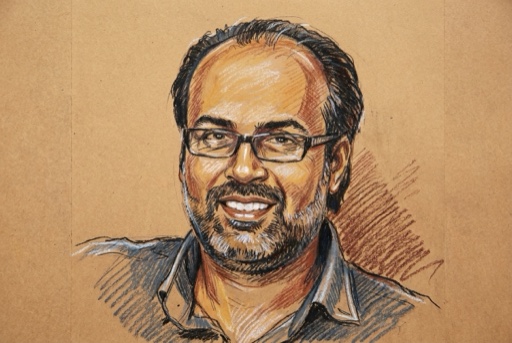
Ahmed Saadawi
@saadawi_a · Lebanon, Syria, Turkey, Iraq, Yemen
Ahmed Saadawi is an Iraqi writer and poet.
From sectarian power-sharing to rule by the armed minority
Translated from ArabicDo we speak Sumerian without knowing it? Iraqi words 4,000 years old #مع_سعداوي via @YouTube
Translated from ArabicThe confiscation of my friend Dr. Ali al-Madan’s book from the Baghdad Book Fair is shameful and disgraceful, especially at a time when the authorities fall silent in the face of dozens of voices babbling sectarian incitement, targeting activists and intellectuals, accusing them of treason, impugning their honor and integrity, questioning their patriotism, and even mocking (patriotism) itself, while openly proclaiming cross-border loyalties. We are in 2026, and bans have become a joke; they may even have backfired, as has happened dozens of times before, increasing the popularity of the banned book and prompting readers everywhere to seek it out. . Instead of arresting the inciters, the fomenters of strife, and those seeking to tear Iraqi society apart even more than its current fragmentation, the al-Zaidi government rushes to arrest a book that cannot be arrested in the first place. Thought and knowledge cannot be arrested or confiscated. I advise Prime Minister al-Zaidi to return the book quickly to the shelves of the Dar al-Hikma pavilion, before the fair days end, and close this shameful chapter to which previous governments have repeatedly returned. . #أحمد_سعداوي
Translated from Arabic[Excerpt] . Adnan asked him whether he intended to go to the forensic medicine department that day as well, since they were both involved in the same task. He offered to stop by in his car and take him with him. Mustafa hesitated for a few moments and felt that his friend was treating the matter more seriously. As for him, he was driven by whims and changes of mood, and even then he still felt nauseated whenever he remembered the strong smell of the morgue when he had entered it for the first time. ـ I’ll be ready in half an hour. He told him that on the phone, then went into the bathroom and smelled the musty odor of an old bathroom with poor drainage. But it was a familiar smell to him, one that also signified life, and it could not be compared with the smells of human decay. He went with Adnan, and they were delayed for a long time by security checkpoints, traffic jams, and neighborhoods cut apart by concrete walls. Before they reached the gate of the forensic medicine department, they imagined they heard a muffled explosion in the distance. Perhaps it was the sound of a shell that had fallen among the residential neighborhoods on the opposite bank of the river. Adnan asked him to get out of the car while he looked for a place to park it. Mustafa smoked a cigarette as he waited on the pavement, then Adnan came to him, gasping for breath, and they went in together. The same scenes he had seen the day before returned before Mustafa’s eyes. He passed the grim faces, the open mouths, and the motionless hands and legs. He did not find the body of his brother Karim among these new dead. He cast a quick glance at those laid out on the cold-room floor; he knew Karim by his emaciated appearance. He moved forward as though he were looking at goods in a "supermarket," then noticed that his friend Adnan had stopped some distance away. He went back to him and found him crouching in front of one of the bodies. It was the body of a young man who had not yet reached twenty. Adnan looked stricken, his eyes glistening. He looked at Mustafa and said to him: ـ It’s him. Mustafa had to stay with his friend until the young man’s female relatives arrived to identify their only man. Half the day passed before all the procedures were completed. Mustafa heard the wailing and the sorrowful lamentations he had previously avoided. The grief inside him multiplied, but he did not want to cry. He would never wash the grief from his chest with tears, as his mother had always asked him to. Nothing washes anything else away in this life. Crying is another push toward the depths of grief, not a lifebuoy. ـ His body was there. Trousers and a short-sleeved shirt, with a large opening in his abdomen. As though someone had hit him with a grenade launcher. It was beside the body of the young man, a relative of my friend Adnan. His mother, the hajjah, asked him, before setting the dinner tray in front of him: ـ Who is he? ـ Abd al-Sahib Khalil. The man with the "Brigo" car, who took its price from us by force. ـ May God have mercy on him. ـ May God curse him ... may God destroy his life. ـ He died and found peace ... may God have mercy on him. . #أحمد_سعداوي *Excerpt from the manuscript of the novel "The Uncertain and Final Journey."* Photograph: Murtada Gazzar
Translated from ArabicWhat do Iraqis think? In recent weeks, we have been hearing constantly what Washington and Tehran want, what the parties accept and what the factions reject, while there has been no serious, organized attempt to ask Iraqis what kind of security they want, or about the limits of weapons and their country’s relationship with the outside world, because this political system was not founded from the outset on the citizen’s right, but rather on imaginary, abstract entities representing sect, ethnicity, and community.
Translated from ArabicBaghdad predates the Achaemenid and Sasanian states #مع_سعداوي
Translated from ArabicA new German edition of the novel #فرانكشتاين_في_بغداد by #أحمد_سعداوي
Translated from ArabicIraq’s money... trusteeship and pretext The gateway to liberating the Iraqi economy from the temporary protection measures, which became permanent because of the will of the Iraqi political actor, begins with the state regaining control over the public sphere and monopolizing weapons, not the other way around.
Translated from ArabicProfessor Ali, honestly, you repeat this statement of yours every day, and we do not know … what do you mean by the Americans leaving [they are fewer than two thousand personnel, and most of them are at Harir Base in Erbil]? Isn’t it a bit of an exaggeration, Professor, to say “full sovereignty over all the territory”? As if the Americans are spread across al-Rutba, Hasiba, al-Jahla, and Sheikh Saad! And then what became of the matter of withdrawing the weapons, or “organizing” them, according to the softened phrase that was circulated for use? I said something to a friend two days ago, and he asked me to write this opinion. I said the following: The problem of the militias’ weapons is an external problem, or it is treated as “Iraq’s problem with the world.” The Americans view these weapons with concern because they are part of Iran’s tools in its conflict with America. An external problem. But what about our problem? Our problem as citizens will not be solved by handing the heavy weapons over to the state and closing the militias’ headquarters, but rather by light weapons remaining in the hands of different political groups—or weapons that can have a suppressor fitted to them—including militia groups that have political fronts, and by the possibility of using them to eliminate or terrorize opponents and pressure them, to terrorize groups of citizens who hold social and official jobs or responsibilities in various institutions, and doing so without legal prosecution, while political settlements remain an alternative to the authority of law. The simplest example of that is what happened a few days ago, when the sentence of a former official in the Shiite Endowment was reduced because of his “representational standing.” What law in the world accommodates unlawful arrangements?! Our problem is with the protection details of officials [one of them killed our friend, Dr. Mohammed Badiwi al-Shammari, for example; he was part of the protection detail of the president of the republic]. Our problem is with the person who possesses a weapon or political influence and sees himself as having privileges over other citizens, so he violates procedures or oversteps the rights of others. Our problem is that the entire Iraqi political class, armed and unarmed alike, has agreed to restrict freedom of expression and to use the law and official government bodies to pursue everyone who expresses an opinion and criticizes the work of institutions or the corruption of officials. I agree with you, Professor Ali, in your insistence on avoiding bloodshed and clashes with any of the militias and following legal procedures and peaceful means of pressure. But the doubt is great and the opening is small, and I am not optimistic: the rubble is enormous, and the cleanup operations are timid and hesitant. The political class is dealing with the matter not as the product of a genuine need to reform the political and economic system, but merely as something they want to push aside with a kick alongside Trump … until his remaining two years are over. #أحمد_سعداوي
Translated from ArabicThe fallacy of the claim that Shiites or Sunnis should rule
Translated from ArabicFurqan Fouad at a seminar in Baghdad about writer Ahmed Saadawi's latest novels; the novel (The Vault). #القبو #أحمد_سعداوي
Translated from ArabicDo the Iraqi government and the Americans speak the same language when they talk about dissolving the militias and restricting weapons to the hands of the state? . #مع_سعداوي
Translated from ArabicI was pleased today to meet His Eminence Cardinal Louis Sako. During the meeting, we held a dialogue and discussion about a number of issues concerning Christians in Iraq, and the role of literature in conveying and strengthening the image of coexistence, as a human bridge that transcends divisions and narrow identities. #أحمد_سعداوي
Translated from Arabic