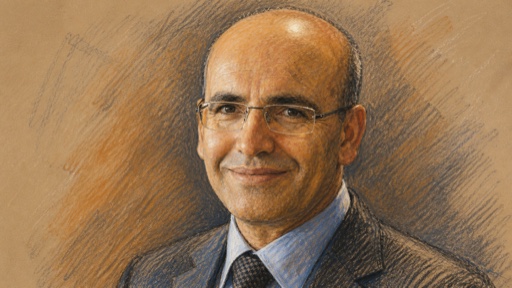
Mehmet Şimşek
@memetsimsek · Lebanon, Syria, Turkey, Iraq, Yemen
Mehmet Şimşek is a Turkish economist and statesperson.
PISA 2025 is out, and Türkiye's investment in education is paying off. We made the biggest gains of any OECD country in all three subjects. Science is above the OECD average for the first time. Reading is above it too. Math is one point short. Overall, 476 against an OECD average of 469. Our ranking among OECD countries rose 15 places in science, 17 in reading and 9 in math. This matters even more given the global picture. Across the OECD, reading scores are down 28 points since 2015 and math down 22, the lowest averages PISA has ever recorded. Almost every advanced economy is losing ground. Türkiye is moving the other way. This is not an accident. For more than two decades, education has been the single largest item in our budget. Productivity starts in the classroom, and there is no better investment a country can make.
While Türkiye improved its ranking in all areas according to the 2025 results of PISA (Programme for International Student Assessment), it performed above the OECD average in science and reading skills. Among 91 countries, our ranking rose by 15 places in science, 18 places in reading skills, and 11 places in mathematics. Türkiye, which increased its score the most in all three areas compared with 2022 among OECD countries, became the only OECD member to continuously improve its performance in all three areas over the past 10 years. In the 2026 budget, we allocated the largest share, 15.3 percent, to education. We will continue our education policies to further strengthen the quality of our human capital, one of the fundamental elements of development, and continue to carry the gains we have achieved further forward.
Translated from TurkishDespite periodic increases in education prices and fuel prices affected by the war, the decline in inflation continued; annual inflation came in at 31.5 percent. While annual core goods inflation fell to 15.9 percent, its lowest level since November 2020, annual rent inflation declined to its lowest level in the last 46 months. While taking steps to limit the inflationary impact of global price shocks, we are also continuing our structural policies in line with our goal of lasting price stability.
Translated from TurkishDigital transformation in rental agreements is accelerating. We offer the opportunity to prepare rental agreements quickly, easily, and reliably through e-Devlet. To date, more than 72,000 agreements have been made through e-Devlet. By expanding the application, we will make transactions easier and strengthen the formal economy.
Translated from TurkishWe have achieved yet another important goal of our program. We have successfully completed the process of exiting KKM, which was a contingent liability. We will continue our policies that strengthen macro-financial stability and increase confidence in the Turkish lira.
Translated from TurkishWe are continuing to strengthen our tradespeople's access to financing. We cover a significant portion of the interest burden on Treasury-backed investment and business loans. With the new regulation we have introduced, we are also facilitating access to financing for our tradespeople who cannot fully meet the credit conditions. We will continue to always stand by our tradespeople who produce, invest, and provide employment.
Translated from TurkishOur determination to achieve savings in the public sector is delivering results. As part of the measures, we achieved savings of 484 billion Turkish lira during the 2024–2025 period. This amount exceeds the combined 2026 budgets of six ministries. We are using public resources more effectively and making a culture of saving permanent. By strengthening spending discipline, we will continue to use the resources we have secured in priority areas.
Translated from TurkishLow indebtedness is an important factor strengthening the resilience of our economy. In our country, the ratio of the total debt of the public sector, financial sector, private sector, and households to national income is 91 percent, well below the average of 229 percent for emerging-market countries and the global average of 306 percent. The ratio of public debt to GDP stood at a historic low of 23.1 percent in the first quarter of 2026. While the gross external debt stock reached $539 billion as of the second quarter, we expect its ratio to national income to remain flat at 31.8 percent. Our low indebtedness provides our economy with significant flexibility in dealing with difficult global conditions.
Translated from Turkish