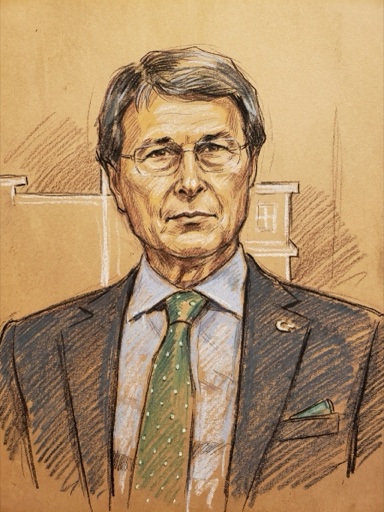
Yusuf Halaçoğlu
@yusufhalacoglu · Lebanon, Syria, Turkey, Iraq, Yemen
Yusuf Halaçoğlu is a Turkish historian and statesperson.
Our book titled ARMENIANS: EXILE and MIGRATION, whose first edition was published in 2004 and fourth edition in 2010, of which 28 copies were purchased by the U.S. when it was first published, and which was prepared using foreign archives by five academics—Hikmet Özdemir, Kemal Çiçek, Ömer Turan, Ramazan Çalık, and Yusuf Halaçoğlu—has been republished by the TTK. It had made a great impact because of its content and the sources used. In my opinion, its republication is of great importance. Hopefully, it will also be published in English, French, and German. I recommend that those who are curious about this subject read it.
Translated from TurkishThe Sultans of the Net are once again at the top of Europe! A magnificent championship achieved through determination, struggle, faith, and team spirit… Our National Women's Volleyball Team, which never gave up fighting against Italy until the very end and defeated Italy 3-2, are European champions for the second consecutive time! They did not merely play volleyball on the court; they once again showed what the courage, hard work, and strength of Turkish women mean. We are proud of you, Sultans of the Net! Congratulations… Champion Türkiye!
Translated from TurkishA passenger ship traveling the Girne–Taşucu route with 259 passengers and 8 crew members has unfortunately sunk on its side off Girne. The latest statements indicate that 237 passengers have been rescued and the lifeless bodies of 7 passengers have been recovered. The statements say that search and rescue operations are continuing. Hopefully, the remaining 23 passengers will also be rescued safely. I extend my best wishes for recovery to everyone affected by the accident. I pray for mercy for those who lost their lives and offer my condolences to their loved ones.
Translated from TurkishToday (August 30), we will talk on Mr. Haluk Tatar’s YouTube channel at 21:00 about the August 26, 1071 Victory of Manzikert, the Commander-in-Chief Victory Day of August 30, 1922, and a perspective from the present day.
Translated from TurkishHappy 30 AUGUST 1922 VICTORY DAY. The 26 August victory at Manzikert. And the 30 August victory, which began on the same date and ended on 30 August, won as a result of the Battle of the Commander-in-Chief personally led by Commander-in-Chief Mustafa Kemal Pasha. Both are among the most important turning points in Turkish history. The first was the victory that reopened the gates of Anatolia to the Turks, while the second was the victory that made the world accept it as the founding charter of the Republic of Turkey. The Kütahya (Dumlupınar)-Afyon line, where the Greek army held on after the Battle of Sakarya and which was thought impossible to cross in six months, was overcome in two hours by an operation personally directed from Kocatepe by Commander-in-Chief Mustafa Kemal Atatürk, and the Greek army was then completely driven out of Anatolia within 13 days. I ask Allah to have mercy on the commanders of this great victory, foremost among them Mustafa Kemal Atatürk, Fevzi Pasha, İsmet Pasha, Nureddin Pasha, Fahreddin Pasha, and Yakup Şevki Pasha, and on all our ancestors who gave their lives and were martyred in the National Struggle. This country is a country where lives were given and blood was shed for the sake of independence, and for this reason it became a HOMELAND. Winning is difficult, but losing is easy. There is no going back for “if only.” Greetings to all patriots and all lovers of the homeland.
Translated from TurkishA VICTORY THAT ENDED AN ERA: THE VICTORY OF MANZIKERT, 26 August 1071. Sultan Alp Arslan and his army inflicted a major defeat on and captured the Eastern Roman Emperor Romanos Diogenes. This date enabled the Turks to gain control of Anatolia again. Anatolia encountered a new civilization. A new, non-pagan civilization that worked the gravestones in Ahlat and marble in the Divriği mosque like lace. In fact, the Turks were also in Anatolia in the 5th millennium BC. However, their state entities had disappeared. Yet there were a significant number of Turks in the Byzantine army. Where had they come from? They were Christian Turks, some from Anatolia and some from Rumelia. The Karamanlides whom we sent to Greece in the 1924 population exchange as Greeks, although they did not know a single word of Greek; and the Uz, Pecheneg, Cuman, Bulgar, Avar, and Hun Turks who came from north of the Black Sea. Among these, the Pechenegs had besieged Istanbul. Byzantium escaped this siege with the help of the Cumans. It is possible to see those Christian Turks in the Ottoman-era land registers. They had been recorded as Christians under names such as Güvendik, Sevindik, Burak, and Tuğrul. May mercy be upon Sultan Alp Arslan, who brought Eastern Rome to its knees in 1071, and upon his army. I bow with respect and gratitude before their spiritual presence.
Translated from TurkishWe visited our veterans and the relatives of our martyrs. We encountered nothing but a disgrace. When we saw the condition of our people who gave their lives for their homeland and lost their feet, hands, eyes, and limbs, our hearts bled. Why is the tolerance shown to the PKK not shown to our veterans? What would the defense minister and interior minister lose by coming to ask after them, visiting them, and listening to their troubles? Why do the 467 lawmakers who vote for the PKK and withhold from their veterans the leniency they show to the İmralı murderer not stand up for their people who became veterans for the sake of their country? What a shame. Governments and nations that do not stand by their martyrs and veterans are doomed to collapse.
Translated from Turkish