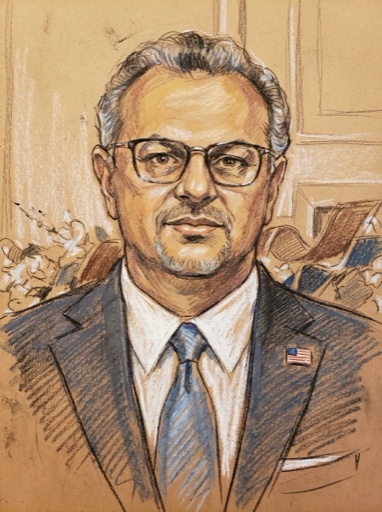
Massad Boulos
@US_SrAdvisorAF · US administration & envoys
Massad Boulos is a senior White House adviser on Arab and Middle Eastern affairs.
The United States welcomes the UN Security Council’s call for further progress toward uniting Libya’s institutions. Libya’s reunification initiative advances this goal, supporting integrated political, economic, military, and security institutions under a single executive authority. U.S. efforts complement UNSMIL’s work and support a Libyan-led path toward elections. The United States continues to work with the Libyan people toward a stable, unified, and prosperous Libya.
Good, in-depth discussion with @HouseForeign Ranking Member Meeks about Sudan. We discussed ongoing efforts through the Quad and other partners to secure a humanitarian truce and unhindered humanitarian access, as well as our advocacy at the UN for an expanded arms embargo in Sudan. We agreed that external military support is worsening the conflict and must end. Appreciate the efforts by Congress to call attention to the conflict in Sudan – the world’s worst humanitarian crisis.
Productive call with President Tebboune to discuss the U.S.-Algeria partnership. The United States supports deeper security cooperation and expanding economic opportunities for U.S. companies in Algeria, with our growing energy partnership paving the way for shared prosperity. I also expressed my condolences to the communities affected by Algeria’s recent wildfires.
I appreciated speaking with Foreign Minister Badr Abdelatty about advancing the U.S.–Egypt strategic partnership, developments in Sudan and Libya, other regional conflicts, and matters of mutual concern. We look forward to continuing our cooperation in pursuit of lasting peace and security throughout the region.
Good to speak with BBC about the urgent need for an expansion of the arms embargo in Sudan. The belligerents should talk less about acquiring additional arms and more about facilitating the delivery of aid to the Sudanese people. Our top priority remains a humanitarian truce and unhindered humanitarian access to the millions of Sudanese civilians in dire need, including those facing the risk of famine.
Proud to author with U.S. UN Ambassador Mike Waltz (@USAmbUN) this article about the importance of expanding the arms embargo in Sudan. “As long as weapons are easier to come by than food in Sudan, cooler heads have little chance to prevail. Any Security Council member considering abstaining or voting no should understand what it is voting for. It will mean business as usual in Sudan—and all the wanton violence that entails.”
An important and timely conversation. Protecting religious freedom and supporting Jewish life across Muslim-majority countries must go hand in hand with confronting antisemitism wherever it appears. Together, we can build a future rooted in dignity, tolerance, and mutual respect.
I condemn the growing number of detentions of aid workers in Sudan. Detained humanitarian personnel must be released. Humanitarians risk their lives in Sudan to save others; these aid workers are essential and must be protected. We continue to urgently press for a humanitarian truce that allows unhindered humanitarian access and increased aid delivery to those most in need, as well as for a comprehensive peace plan that helps holds parties to their humanitarian obligations.
Yesterday’s signing marks an encouraging step forward in Libya’s political process. I commend the parties for their constructive engagement and for reaching agreement on key electoral issues. Now is the time to build on this momentum, advancing implementation and further progress toward national elections, unified institutions, and a stable and prosperous Libya.
Useful conversation with Egypt’s Foreign Minister Dr. Badr Abdelatty about the situation in Sudan. We discussed efforts to reach a humanitarian truce enabling unhindered humanitarian access and efforts towards an inclusive Sudanese-Sudanese political dialogue. We re-affirmed that there is no military solution to the conflict and we must work towards civilian rule in a unified Sudan.
Good call with the UK’s National Security Adviser Jonathan Powell on Sudan and other regional conflicts of mutual concern. We underscored the urgent need for a meaningful and inclusive Sudanese dialogue leading to a durable peace agreement. Escalating external support to the warring parties is fueling the conflict, prolonging the suffering of the Sudanese people, and must stop. We value our close partnership with the UK and our continued cooperation in support of peace and stability across the region.
Good call today with Norwegian Deputy Foreign Minister Kravik (@akravik79) about a range of shared interests: advancing efforts towards a genuine and inclusive Sudanese dialogue and path to peace; opportunities for bringing stability to Yemen and the Red Sea; and advancing lasting solutions for other regional conflicts. We appreciate our alliance with Norway and their expertise and increased funding for humanitarian efforts in conflict zones.
The United States welcomes Chevron’s return to Libya and renewed collaboration with the National Oil Corporation—an important signal of growing American confidence and investment in Libya’s future. This partnership can help expand production, modernize infrastructure, create jobs, and open the door for greater American investment across Libya’s economy. Libya’s greatest prosperity will come through unity and stability. A unified Libya can unlock its enormous potential, attract lasting investment, and ensure its wealth benefits Libyans from east to west and north to south—while creating new opportunities for both the Libyan and American people.
I had a productive call today with President Mahamat Idriss Déby Itno of Chad. We discussed the recent SAF aerial strike on Chad and underscored our deep concern about the war in Sudan spilling across its borders, fueling further escalation, and threatening regional peace and stability. External financial and military support to the warring parties must stop. Separately, we discussed Chad’s vital role in facilitating humanitarian relief to the Darfur region and supporting Sudanese refugees. I expressed our appreciation for Chad’s partnership and look forward to our continued close cooperation and coordination on these and other shared priorities.
The United States condemns the SAF’s recent air strikes inside Chad. The violence must stop in Sudan and beyond. There is no military solution to this conflict—and absolutely no justification for expanding the violence beyond Sudan’s borders. The parties must immediately accept a humanitarian truce, protect civilians, and allow unhindered humanitarian access. The UN Security Council must also act with urgency to ensure that the arms embargo and sanctions regime reflect the realities of the conflict today and hold those fueling and expanding this war accountable. External financial and military support to the warring parties must stop.
I had a productive phone call with H.E. Dr. Mohammed bin Abdulaziz Al Khulaifi, Qatar’s Minister of State at the Ministry of Foreign Affairs. We discussed a number of conflicts across the Arab world and the wider region, as well as other matters of mutual concern. Qatar remains a valued partner in advancing peace and stability, and we will continue working together toward these shared goals.
Pleased to speak with H.H. Sheikh Abdullah bin Zayed Al Nahyan, Deputy Prime Minister and Minister of Foreign Affairs of the United Arab Emirates. We exchanged views on ongoing conflicts and developments across the Arab world and the wider region, and discussed efforts to de-escalate tensions, advance peaceful solutions, and strengthen regional stability.
As a critical technocratic institution, Libya's Central Bank plays a vital role in the country's economic stability. We continue to strongly support the unified budget agreement as a means of strengthening the Central Bank's ability to safeguard Libya's financial stability and protect the purchasing power of the Libyan people. The United States remains committed to supporting Libyan efforts to unify economic, military, and political institutions and to create the conditions for lasting stability, prosperity, and peace.
Productive discussion with HE Deputy FM of Saudi Arabia Khuraiji and Prince Musab about our efforts to secure a humanitarian truce in Sudan that enables unhindered humanitarian access and opens space for civilian dialogue and governance, among other areas of bilateral cooperation. We agreed there is no military solution to the conflict. We value our alliance with Saudi Arabia as President Trump seeks peace in the region.
The United States and Egypt reaffirm their shared commitment to advancing regional cooperation and addressing ongoing conflicts through sustained dialogue and continuous coordination. During my recent call with Foreign Minister Dr. Badr Abdelatty we reiterated our urgent call for an immediate humanitarian truce in Sudan to create the space for humanitarian access and transition to civilian governance. The longstanding U.S.-Egypt partnership remains vital to promoting peace and stability across the region.
We welcome this important step forward in U.S.-Libya security cooperation. Sustained engagement among Libyan military leaders from across the country remains essential to achieving unified military and security institutions and building a more stable, secure, and prosperous Libya.
We welcome the progress Libyan parties made in Tunis toward agreement on electoral laws and the High National Elections Commission - an important step toward a credible path to successful national elections. The United States will continue to support dialogue among Libyan stakeholders and to work with @UNSMIL and international partners to help Libyans achieve a durable political solution and establish a unified executive capable of governing all of Libya.
Iran uses Hizballah to sow chaos across the Middle East, undermine Lebanon's sovereignty, and threaten our regional allies. Today's @USTreasury action, re-designating Hizballah and sanctioning ten individuals who moved cash between the IRGC-Qods Force and Hizballah, shows our resolve to cut off these terror financing networks.
A warm welcome to our new NEA Assistant Secretary Donald Blome. I look forward to working closely together to advance President Trump’s vision for a more peaceful, secure, and prosperous Middle East that delivers greater security and opportunity for the American people.
The United States is concerned by recent acts of violence in Zawiya and Benghazi. The United States condemns the attacks on the Zawiya refinery and killing of Libyan National Army Director of Military Intelligence Fawzi al-Mansouri in Benghazi. We call for thorough investigations into the attacks and for those responsible to be held accountable. These attacks underscore the need for unified, professional military and security institutions capable of providing security for the Libyan people. We urge Libyan stakeholders to redouble their efforts to overcome divisions and advance the unification of Libya’s military, economic, and political institutions.