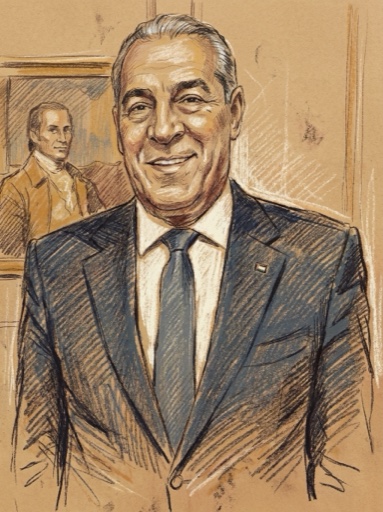
Hussein al-Sheikh
@HusseinSheikhpl · Palestinian voices
Hussein al-Sheikh is the vice president of the Palestinian Authority and long its main liaison to Israel.
Today, Wednesday, I met with the chairman of the Central Elections Commission, Dr. Rami al-Hamdallah, as part of following up on the ongoing preparations and arrangements for carrying out the national electoral process and reviewing the latest developments concerning the readiness required to hold the elections in accordance with the applicable legal and constitutional frameworks. During the meeting, we reviewed what had been accomplished in this regard and followed up on the steps and procedures that the Central Elections Commission is working to complete, in addition to discussing the technical, administrative, and logistical requirements necessary to ensure full readiness for the stages of the electoral process, thereby ensuring that it is carried out professionally, efficiently, transparently, and impartially. I stressed the importance of continuing the work at an accelerated pace to complete all preparations related to the electoral process and providing everything necessary to enable the Central Elections Commission to perform its duties in accordance with the law and the highest professional standards, thereby strengthening citizens' confidence in the electoral process and ensuring the exercise of their democratic right. For his part, Dr. al-Hamdallah briefed me on the latest developments in the commission's work, the level of progress in the ongoing procedures and preparations, the plans related to completing technical and organizational readiness, and the challenges facing the work of the Central Elections Commission amid the complex political and security conditions. He affirmed that the commission would continue to fulfill its national responsibilities in accordance with the provisions of the law, in a manner that ensures the integrity and transparency of the electoral process and the soundness of its procedures.
Translated from ArabicWe welcome the statement by the foreign ministers of the 12 countries (Britain, France, Canada, Denmark, Finland, Iceland, Ireland, Norway, Poland, Portugal, Spain, and Sweden) on the two-state solution, and the measures listed to impose trade restrictions on goods from illegal settlements. However, its is essential to transform condemnation to binding and decisive actions that would put a stop to settlement expansion and the de facto annexation of the West Bank territories, enforce international legitimacy, international law, and UN Security Council resolutions’ compliance, and hold perpetrators of settler terrorism and violence accountable. The occupation government's continued settlement plans, particularly the E1 project, threaten to fragment the Palestinian territory, severing the northern West Bank from its south, and seriously undermine the possibility of establishing a contiguous Palestinian state. Protecting the two-state solution means protecting the Palestinian territory from annexation, settlement, and settler terrorism; ending the occupation; and translating international law into action, thereby ensuring regional and international stability and security.
We welcome the statement by the foreign ministers of the 12 countries (Britain, France, Canada, Denmark, Finland, Iceland, Ireland, Norway, Poland, Portugal, Spain, and Sweden) on the two-state solution and the steps it contains to impose restrictions on trade in products from illegal settlements. But what is required is a shift from condemnation to binding and decisive measures that halt settlement expansion and the de facto annexation of West Bank lands, enforce respect for international legitimacy, international law, and the resolutions of the United Nations Security Council, and hold the perpetrators of settler terrorism and violence accountable. The continuation by the occupation government of its settlement plans, particularly the E1 project, threatens to fragment the Palestinian land and separate the northern West Bank from its south, and seriously undermines the possibility of establishing a contiguous Palestinian state. Protecting the two-state solution means protecting the Palestinian land from annexation, settlement, and settler terrorism, ending the occupation, and translating international law into action, thereby ensuring regional and international stability and security.
Translated from ArabicToday, Monday, I received the heads of the popular committees of the Palestinian camps in the West Bank, in the presence of Mahmoud Mubarak, head of the Executive Office of the Popular Committees in the camps, as part of following up on the conditions in the camps and learning about the main challenges and needs facing our people among the refugees. I emphasized the importance of the national and community role undertaken by the popular committees in serving the residents of the camps, strengthening their steadfastness, and preserving the national identity and rights of the refugees, amid the difficult political, field, and economic conditions through which our people are living, especially in light of the occupation’s targeting of the international UNRWA agency and its disregard for international humanitarian law. During the meeting, a number of issues related to conditions in the camps in the West Bank, and their service, development, and social needs, were discussed, along with the challenges facing the residents of the camps as a result of the ongoing Israeli measures and attacks and the difficult conditions they impose on the population. I affirmed that the camps were and will remain an integral part of the Palestinian national fabric, and that the issue of the refugees and their legitimate national rights represents one of the constants of the Palestinian cause, stressing the need to continue working to provide the foundations for steadfastness and strengthen the services provided to the residents of the camps in ways that alleviate their suffering and preserve their dignity. For their part, the heads of the popular committees reviewed the general conditions in the camps, the main challenges facing the popular committees, and the priority needs, emphasizing the importance of continuing communication and coordination with the Palestinian leadership in a way that contributes to addressing the camps’ issues and strengthening the steadfastness of their residents.
Translated from ArabicFatah Central Committee Holds Meeting to Discuss Political Developments and Field and Organizational Preparations for General Elections Ramallah – 06/09/2026 – The Central Committee of the Palestinian National Liberation Movement “Fatah” held a meeting today, Sunday, in the city of Ramallah, chaired by His Excellency the Deputy President of the State of Palestine and Deputy Chairman of “Fatah,” Brother Hussein al-Sheikh, to discuss all current political developments at the regional and international levels and the latest developments on the ground in the homeland, alongside following up on the ongoing efforts and preparations to complete preparations for the upcoming general elections. At the beginning of the meeting, the Central Committee unanimously elected His Excellency Lieutenant General Jibril Rajoub as its secretary and also assigned Dr. Layla Ghannam to the Development and Empowerment Commission, as part of continuing the organizational work process and distributing movement and leadership responsibilities. The meeting extensively discussed the rapid developments taking place in the Palestinian arena amid the continuation of the Israeli war of annihilation against our people and the escalation of Israeli attacks and violations in the West Bank, including Jerusalem, accompanied by repeated incursions into cities, villages, and refugee camps, arrests, raids, and assaults on citizens, as well as the escalating terrorism of settler militias and their attacks on our people, their property, and their land, in an effort to impose new facts on the ground and undermine the foundations of Palestinian steadfastness. The Central Committee also saluted the brave prisoners in the occupation’s prisons, foremost among them Central Committee member and leader Marwan Barghouti. The Central Committee also discussed the political repercussions of these developments, the efforts undertaken at the national, Arab, and international levels to confront Israeli policies, mobilize international positions rejecting the continuation of the occupation and its attacks, and affirm the legitimate national rights of our people, foremost among them the right to freedom and independence and to establish their independent Palestinian state. Regarding internal affairs, the Central Committee reviewed detailed reports on the level of organizational readiness and ongoing field preparations for the upcoming general elections. It also reviewed the progress of work in specialized committees and electoral assemblies in the various governorates, which include all movement and organizational frameworks and components, and what has been completed of procedures and work in this regard. The Central Committee stressed the importance of continuing work at a high pace, raising the level of organizational and field readiness, and completing all necessary procedures and arrangements in a way that ensures the movement’s readiness for this national and democratic entitlement, strengthens its organizational presence in the various governorates, and accords with the importance of general elections as a national and democratic entitlement that renews Palestinian political and institutional life. The meeting also discussed the work of the specialized committees and followed up on coordination mechanisms between them and the organizational and movement frameworks in the governorates, ensuring the integration of efforts and the unification of work paths, strengthening communication with the various organizational components, and continuing to assess the level of achievement, readiness, and preparation for the coming stages. The meeting also addressed a number of organizational and national files and mechanisms for strengthening the unity of the movement, developing organizational work, and enhancing the movement’s ability to perform its national and political role in this delicate phase, while affirming the importance of preserving the unity of the independent Palestinian national position and decision. At the conclusion of the meeting, the Central Committee affirmed that it would continue working at all political, organizational, and field levels and follow up on priority national files in a manner that serves the higher interests of the Palestinian people and strengthens their steadfastness and adherence to their legitimate national rights to freedom and independence and to establish their independent state.
Translated from ArabicMy participation today in the launch of sports activities in Palestine alongside my brother, General Jibril Rajoub, president of the Football Association, in the presence of my brothers, Central Committee members Adnan Gheith and Zakaria al-Zubeidi, and the director-general of the Palestinian Police, Major General Allam al-Saqqa. Today’s activity is a message of commitment and loyalty.
Translated from ArabicRamallah- 31/08/2026- Today, Monday, I discussed with the European Union Special Representative for the Middle East Peace Process, Christophe Bigot, and his accompanying delegation a number of political and field-related issues concerning developments in the Palestinian territories, foremost among them the ongoing escalation of settler attacks and terrorism in the West Bank, the continuation of the war of extermination in Gaza, and the reconstruction process, along with the targeting of the United Nations Relief and Works Agency for Palestine Refugees (UNRWA). We also reviewed the ongoing preparations for the Palestinian electoral process. The meeting was attended by members of the Fatah movement's Central Committee, Dr. Leila Ghannam, Dr. Musa Abu Zaid, Zakaria al-Zubaidi, and Dr. Ahmad Abu Houli, as well as the head of the Vice President's Office, Aya al-Muhaisen. The European delegation included Simon Bompais, adviser to the Special Representative for the Middle East Peace Process; Johan Friedborn Larson, head of the Political Section at the Office of the European Union Representative; and Shadi Othman, media officer. During the meeting, I outlined the danger of the growing escalation in the West Bank and the repeated attacks carried out by settlers against Palestinian citizens and their property. I stressed that the continuation of these attacks, together with the terrorist acts accompanying them, constitutes a direct threat to security and stability and calls for a more effective international stance to stop them and hold those responsible accountable, amid the perpetrators' persistence in these crimes and their blatant disregard for international charters and treaties. Their most recent attacks targeted the international UNRWA agency and its facilities and personnel in the West Bank and Jerusalem. The meeting also addressed the Palestinian elections file, in light of the preparations and procedures underway in this regard, and the importance of providing the political, field-related, and legal environment necessary to complete the electoral process in a way that strengthens Palestinian democratic life and affirms the Palestinian people's right to exercise their political rights. I emphasized the importance of the European role in supporting efforts aimed at protecting the Palestinian people, stopping settler attacks, ending the ongoing war on the Gaza Strip, beginning the reconstruction process, and preserving opportunities to achieve peace and stability. I stressed that the international position on what is happening on the ground must be accompanied by practical steps that help put an end to the ongoing escalation. For his part, the European Union Special Representative for the Middle East Peace Process, Christophe Bigot, affirmed the need to stop settler attacks and acts of violence in the West Bank and to protect Palestinian citizens and their property. He stressed the importance of continuing preparations for the Palestinian elections and supporting the democratic process in a way that contributes to strengthening stability and preserving opportunities for peace.
Translated from ArabicI received today, Sunday, the mayor of Beit Sahour, Laith Qumsieh, and members of the municipal council to discuss the general situation in the city, its needs and priorities, and the efforts being made to strengthen the services provided to citizens. I listened to an explanation of the city's situation, the main challenges facing the work of the municipal council, and the needs related to infrastructure, municipal services, and development projects, in addition to the future plans and projects that the municipality seeks to implement in a way that contributes to improving the level of services and strengthening the steadfastness of citizens. I affirmed the importance of the role of local authorities in serving citizens and strengthening their steadfastness. I also affirmed the Palestinian leadership's commitment to following up on and strengthening the Christian presence as one of the most important social components of our Palestinian people and its history extending over thousands of years, and to protecting the Christian holy sites in Palestine as a fundamental component of the national and civilizational identity and the human history of the entire world, especially amid a systematic campaign by the occupation attempting to impose mechanisms of forced displacement. For his part, Qumsieh praised the meeting, affirming the importance of national institutions supporting local authorities and empowering them to carry out their duties, and continuing to work to develop the city and improve the services provided to its residents, especially amid the ongoing targeting and attacks by the occupation and its settlers.
Translated from ArabicI met today, Tuesday, with Deputy Prime Minister and Minister of Foreign Affairs and Expatriates Ayman Safadi, and held talks with him focused on developments in the situation in the occupied Palestinian territory and the ongoing coordination and consultation regarding it. We discussed the dangerous deterioration in the occupied West Bank and warned against the continuation of unlawful Israeli measures, including settler terrorism, settlement expansion, land confiscation, and the besieging of the Palestinian economy, which are pushing the West Bank toward an explosion, constitute a flagrant violation of international law and the resolutions of international legitimacy, entrench the occupation, and undermine the prospects for achieving peace. We condemned the escalation of settler terrorism against Palestinians, and also condemned Israel’s continued systematic campaign targeting the United Nations Relief and Works Agency for Palestine Refugees (UNRWA) and restricting it and its institutions in occupied Jerusalem, as well as the decision by the occupation authorities to issue tenders to build hundreds of settlement units within the “E1” settlement project east of occupied Jerusalem; a flagrant violation of international law and international humanitarian law. We affirmed the necessity of stopping Israeli violations in occupied Jerusalem and Israel’s systematic attempts to change the historical and legal status quo at the Islamic and Christian holy sites. We also affirmed the importance of implementing the outcomes of the ministerial meeting to support Jerusalem and its holy sites, which the Kingdom hosted on the eighth of this month. Regarding developments in the Gaza Strip, we affirmed the need to consolidate stability, fully implement all provisions of U.S. President Donald Trump’s plan for Gaza, and ensure that sufficient and sustainable humanitarian aid enters the Strip without obstacles to alleviate the ongoing humanitarian catastrophe there. We called for the need to formulate effective and serious regional and international action to stop the unlawful Israeli measures, and stressed that realizing an independent Palestinian state along the lines of June 4, 1967, with East Jerusalem as its capital, on the basis of the two-state solution, is the only way to achieve a just and comprehensive peace that guarantees lasting security and stability in the region. We also agreed to continue cooperation and coordination regarding developments and matters of common interest. The meeting was attended by Central Committee member Majed Faraj and President of the Palestinian National Council Ruhi Fattouh.
Translated from ArabicI discussed with His Excellency the Minister of Foreign Affairs, International Cooperation and Egyptians Abroad, Dr. Badr Abdelatty, the situation in occupied Palestine and efforts to implement the peace plan, as part of the ongoing communication and consultation بشأن developments in the Palestinian cause and efforts to support the legitimate rights of the Palestinian people. The meeting was attended by His Excellency the member of the Central Committee of the Fatah movement and head of the General Intelligence Service, Major General Majed Faraj, and His Excellency the President of the Palestinian National Council, Rouhi Fattouh. It took place yesterday, Monday, in the Egyptian city of El Alamein. The meeting addressed the current catastrophic situation in the Gaza Strip as a result of the inhumane Israeli practices there, and the vital importance of the international community pressuring Israel to fulfill its obligations under President Trump’s peace plan, including the unhindered flow of humanitarian aid and withdrawals from the Gaza Strip, in a way that paves the way for the Palestinian Authority to resume its full responsibilities in the Gaza Strip. The meeting also addressed the dangerous developments in the West Bank amid the settlers’ daily and systematic attacks against innocent Palestinian civilians, as well as the ongoing expansion of illegal and unlawful settlement activities and the continuing violations of Christian and Muslim holy sites in East Jerusalem. Minister Abdelatty renewed Egypt’s full condemnation and its complete and categorical rejection of all illegal Israeli measures that seek to impose a new reality on the ground or undermine the unity of the Palestinian territories. He stressed the need to preserve the unity of the Gaza Strip and the West Bank and to create a serious political horizon leading to the establishment of an independent Palestinian state along the lines of June 4, 1967, with East Jerusalem as its capital. The meeting also addressed efforts to achieve Palestinian reconciliation and restore Palestinian unity, as well as continuing the ongoing political reform process. I also expressed my deep appreciation for Egypt’s pivotal role in supporting the Palestinian cause and defending the legitimate rights of the Palestinian people, commending Egypt’s efforts and contacts to halt the escalation, advance implementation of the peace plan, and support the Palestinian Authority, while affirming my commitment to continue close coordination and consultation with Egypt during the coming period.
Translated from ArabicToday, Sunday, I met with His Excellency Major General Hassan Rashad, head of the Egyptian General Intelligence Service, in the Egyptian city of El Alamein, with the participation of His Excellency Major General Majed Faraj, head of the Palestinian General Intelligence Service and a member of the Central Committee of the Fatah movement, and His Excellency Ruhi Fattouh, president of the Palestinian National Council, as part of the Egyptian efforts to reunite the Palestinian ranks. The talks addressed current developments in the Palestinian territories and the West Bank, in addition to preparations for the upcoming Palestinian elections. I conveyed the greetings of Palestinian President Mahmoud Abbas to His Excellency President Abdel Fattah el-Sisi, President of the Arab Republic of Egypt. We also discussed developments in the West Bank and preparations for the upcoming Palestinian elections, and during the meeting agreed on the need to unify national efforts and coordinate common positions to confront the escalating challenges facing the Palestinian cause at the present stage.
Translated from ArabicToday, Saturday, I received a delegation from the Palestinian Journalists Syndicate, along with a group of media professionals, journalists, and influencers, in the presence of the Journalists Syndicate president, Nasser Abu Bakr. The meeting addressed the latest political, economic, and security developments, as well as developments related to the Palestinian cause, including the upcoming general elections. During the meeting, I reviewed the latest developments and developments on the Palestinian and regional scene, amid the current political and field conditions, stressing the importance of preparing for the upcoming national milestones, foremost among them the elections, in a way that strengthens national and democratic participation and preserves the Palestinian national interest. I discussed the continuation of the Israeli war on the Gaza Strip and the widespread human suffering it causes, alongside the continued and escalating attacks by settlers in the West Bank and Jerusalem, and the violations accompanying them that target the Palestinian people, their land, and their resources. I stressed the importance of continuing political, diplomatic, and media efforts to confront these policies, protect Palestinian national rights, and expose the occupation’s violations against civilians and international humanitarian law. I affirmed that freedom of the press and journalistic work are a fundamental pillar of Palestinian national life, emphasizing the important role journalists and media professionals play in conveying the truth, documenting violations, and delivering the Palestinian narrative to the world. I commended the sacrifices made by Palestinian journalists throughout their professional and national careers, and the achievements they have made in service of the Palestinian cause. Palestinian media has been and will remain an essential partner in defending national rights and strengthening the presence of the Palestinian narrative at the regional and international levels. For their part, the delegation reviewed the reality of journalistic work in Palestine, the latest violations and attacks faced by journalists and media institutions, the preparations and arrangements being made by local and international media institutions operating in Palestine to cover the upcoming electoral process, and the needs of the media sector to ensure professional and comprehensive coverage of all stages of the electoral process.
Translated from ArabicI welcome the joint position issued by the United Kingdom, France, Germany, and Italy rejecting the advancement of the E1 settlement project in the West Bank, which calls on the occupying government to withdraw it immediately. I commend the four countries’ affirmation that the settlements are illegal, and their warning about the danger of the E1 project, whose implementation would undermine the geographic contiguity of the Palestinian territory and diminish the chances of achieving a two-state solution. This position reflects the importance of the international role in confronting settlement activity and protecting the two-state solution, and we hope it will be translated into practical steps to halt these policies and protect the rights of our Palestinian people.
Translated from ArabicFatah Central Committee holds meeting to discuss political and security conditions and elections. Ramallah – 20/08/2026 – The Central Committee of the Palestinian National Liberation Movement "Fatah" held a meeting chaired by the movement’s deputy chairman, brother Hussein al-Sheikh, to discuss a number of political and security issues, the continuation of the Israeli occupation’s attacks on our people in its war on the Gaza Strip, and the continuation of settlers’ attacks and their excesses in violence and displacement against our people in the West Bank and Jerusalem. The meeting also discussed preparations, readiness, and the mobilization of energies and determination to ensure the movement’s success in the upcoming elections. The Central Committee affirmed that the current stage requires the highest levels of national and organizational responsibility, strengthening unity within Fatah’s ranks, and unifying efforts and energies in confronting the political and field challenges facing the Palestinian cause, in a manner consistent with the higher national interest of our people. At the same time, the movement affirmed the need to continue dialogue with the Palestinian national forces and factions in a way that strengthens national unity and serves the higher national interest. It stressed the need to continue political and diplomatic action at all levels to stop the ongoing Israeli aggression against the Gaza Strip, halt the occupation’s crimes and settlers’ attacks in the West Bank, and confront policies of displacement, settlement, and land confiscation, affirming that our people will continue their steadfastness and their adherence to their land and legitimate national rights. The committee discussed a number of internal organizational issues and adopted the necessary decisions and recommendations concerning them, foremost among them the election of Central Committee member, brother Taysir al-Bardini, as deputy secretary of the Central Committee. The committee affirmed that it would continue its meetings and close follow-up of all political, security, and organizational developments, in a manner that serves the Palestinian national project and preserves the unity of the movement and its role in the national struggle. The Central Committee also discussed organizational preparations for the upcoming elections, ways to strengthen readiness across the various organizational frameworks, and the mobilization of the movement’s cadres and supporters, ensuring effective and responsible participation in this national entitlement and reflecting the presence of the "Fatah" movement and its historic role in Palestinian national and political life.
Translated from ArabicToday, Wednesday, I received the Chairman of the Central Elections Commission, Dr. Rami al-Hamdallah. We discussed the final preparations, arrangements, and readiness required to carry out the national electoral process, ensuring that it is conducted in accordance with the legal and constitutional frameworks and with the highest levels of professionalism, integrity, and transparency. I emphasized the central role played by the Central Elections Commission in preparing for this national process, stressing the need to complete all technical, logistical, and administrative requirements and to provide the appropriate environment and conditions to enable the Commission to perform its duties independently and efficiently, thereby strengthening citizens' confidence in the electoral process and its outcomes. During the meeting, I reviewed the Commission's readiness, plans, and programs related to preparations for the elections, as well as the proposed working mechanisms to ensure that the electoral process proceeds through its various stages according to the highest professional standards and enables citizens to exercise their electoral right as an authentic national and democratic entitlement. For his part, Dr. al-Hamdallah presented the procedures that the Commission is working to complete and the level of its technical and organizational readiness to carry out the tasks entrusted to it, affirming the Commission's readiness to fulfill its national responsibilities in accordance with the law and to ensure the integrity and transparency of the electoral process and the soundness of its procedures.
Translated from ArabicToday, Sunday, I received His Eminence Sheikh Muhammad Ahmad Hussein, the Grand Mufti of Jerusalem and the Palestinian Territories, Chairman of the Supreme Fatwa Council and preacher of the blessed Al-Aqsa Mosque, to discuss the latest developments and updates in the city of Jerusalem and the blessed Al-Aqsa Mosque, amid an escalation in the occupation's measures and its targeting of holy sites and religious authorities. During the meeting, I stressed the need to intensify efforts and diplomatic endeavors at all levels, in order to protect the blessed Al-Aqsa Mosque and preserve its religious, historical, and legal status, and to confront the invalid measures of the occupation in the capital, Jerusalem, affirming that these measures do not alter the fact that Jerusalem and its holy sites are an integral part of the land of the State of Palestine. I condemned the occupation government's exploitation of the wars and tensions taking place in the region in an attempt to impose new realities on the ground in the city of Jerusalem and change the existing status quo at the blessed Al-Aqsa Mosque, warning of the danger of these policies continuing and the repercussions they carry for security and stability in the region. I commended the national and religious role undertaken by the Palestinian Dar al-Ifta institution, and its awareness-building and spiritual efforts to strengthen religious awareness, entrench the values of moderation and tolerance, and preserve community security and civil peace. For his part, His Eminence the Grand Mufti briefed me on the latest developments at the blessed Al-Aqsa Mosque and the measures and practices taking place in the city of Jerusalem that target the mosque, its visitors, and its religious authorities, affirming the need to continue national, religious, and diplomatic efforts to protect the mosque and preserve its identity and status, and to confront the occupation's attempts to impose a new reality in the holy city.
Translated from ArabicWe strongly condemn the decision of the Israeli government/Israeli Minister of Defense to transfer law enforcement powers in the Israeli settlements established on the territory of the occupied State of Palestine to the Israeli police. This step constitutes a flagrant violation of international law, international legitimacy resolutions, and signed agreements, and a new attempt to impose Israeli law and sovereignty on the occupied West Bank, including East Jerusalem, and to entrench the illegitimate annexation of Palestinian land. Settlement in all its forms is illegal, and Israel has no sovereignty over any part of the territory of the State of Palestine occupied in 1967. We call on the international community, and foremost the UN Security Council, to assume its responsibilities, halt these unilateral and dangerous Israeli actions, and oblige Israel to comply with international legitimacy resolutions and international law.
We strongly condemn the decision by the Israeli government / the Israeli defense minister to transfer law-enforcement powers in the Israeli settlements established on the land of the occupied State of Palestine to the Israeli police. This step constitutes a flagrant violation of international law, the resolutions of international legitimacy, and the signed agreements, and a new attempt to impose Israeli law and sovereignty over the occupied West Bank, including East Jerusalem, and to entrench the illegal annexation of Palestinian land. Settlement is illegal in all its forms, and Israel has no sovereignty over any part of the land of the State of Palestine occupied in 1967. We call on the international community, foremost the Security Council, to assume its responsibilities, stop these unilateral and dangerous Israeli measures, and compel Israel to abide by the resolutions of international legitimacy and international law.
Translated from ArabicToday, Wednesday, I received H.E. Ambassador Alexandre Stutzmann, the European Union Representative to the State of Palestine, in a farewell meeting on the occasion of the completion of his duties in the State of Palestine, in the presence of Mr. Felix Andaker, the EUPOL COPPS Head of Mission, and Ms. Monica Magon. During the meeting, I conveyed to the European Union Representative a set of messages in which I emphasized the necessity for the international community to fulfill its responsibilities and stand alongside the Palestinian people, amid the ongoing Israeli aggression on the Gaza Strip, the escalation of settler attacks in the West Bank, and the accompanying measures targeting the Palestinian people and their legitimate national rights. I also stressed the urgent need to end the Israeli occupation government’s withholding of Palestinian clearance revenues, which are Palestinian funds and rights, while simultaneously warning of the repercussions of these measures on the economic and living conditions in Palestine, and on the Palestinian government's ability to meet its obligations toward citizens. I affirmed that the continuation of these Israeli policies and measures falls within the framework of efforts aimed at undermining the prospects of establishing an independent Palestinian state, and constitutes a clear violation of international legitimacy, international law, and the bilateral signed agreements. At the conclusion of the meeting, I expressed my appreciation for H.E. Mr. Stutzmann during his tenure as the European Union Representative to Palestine, wishing him success and achievement in his coming endeavors. For his part, H.E. Mr. Stutzmann expressed his profound pride in his work and service alongside the institutions of the State of Palestine during the years he held the position of European Union Representative. He affirmed his appreciation for the ongoing cooperation and coordination with the Palestinian leadership and institutions, praised the relations uniting the State of Palestine and the European Union, and expressed his continued support for efforts to achieve peace and stability and to realize the legitimate rights of the Palestinian people.
Connected stories
- UK Announces Import Ban and Sanctions Regime Targeting Settlement Trade
- Leaders of Seven Countries Demand Israel Withdraw E1 Construction Tenders
- Britain Weighs Settlement-Trade Ban and Wider Sanctions Over E1
- EU High Representative Calls on Israel to Withdraw E1 Housing Tender
- Britain Summons Israeli Chargé d’Affaires Over E1 Tender, Pledges Sanctions
- Katz Directs IDF to Plan Transfer of West Bank Civilian Enforcement to Police