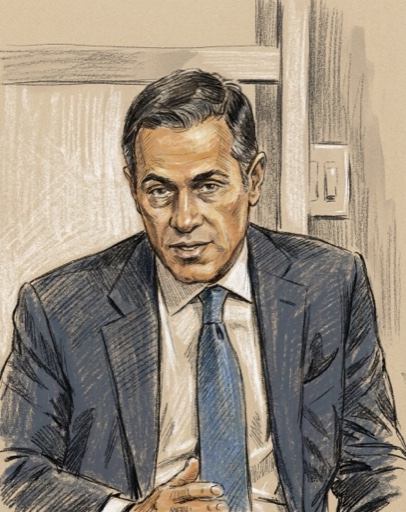
Vali Nasr
@vali_nasr · Iran watchers, nuclear experts & opposition
Vali Nasr is a Johns Hopkins professor and a leading voice of the engagement school on Iran.
My interview with WTFinance podcast on where the US-Iran stand-off is heading and the legacy of the war https://t.co/Jk5QPHfArQ
excellent take by @yarbatman on ground realities of Iran's economy and why America can’t easily strangle it https://t.co/aeSqKHzQZd
Astonishing read in @Newyorker The twisted logic of turning a blind eye to the humanitarian catastrophe in Gaza as a strategy to contain Iran? 👉 "Iran had been central to Biden’s thinking about the Middle East, several top advisers said. He’d feared that any public pressure the U.S. put on Israel—any “daylight” between the allies—could invite attacks by Iran or its Lebanese client, Hezbollah. The U.S. would then be compelled to defend Israel in a regional conflagration. Brett McGurk, Biden’s White House coördinator for the Middle East and probably his most influential adviser, championed this position" https://t.co/5hkQL7epcj
I told @WSJ “The assumptions of both sides have not come true, and both of them also do not have an exit. One option is to cave in. The other is to escalate in a much bigger way, to try to fight their way out of the corner, and escalation could be a more likely choice. Iran’s calculation is that even if it has to go back to the negotiating table and even if it has to make concessions, it would have to make fewer concessions if they put more pressure militarily.” https://t.co/0ueLDqeQTY
My interview with the Telegraph on implications of six month of war for the Middle East regional order https://t.co/V4bupckCL7
My interview with BBC News podcast on D-Day sanctions on Iran, and will it make a difference https://t.co/TjnF3sD7u5
From my interview with @Telegraph on where do Iran and US stand after a week of D-Day sanctions and regional diplomacy with Tehran
@jafariysaeid 👉🏽 Why in answer to more economic pressure Iran might escalate https://t.co/KuzGJcA5VI
Important piece by @NateSwanson83 on why Maximum Pressure on Iran Will Fail. “Forty-seven years of prioritizing pressure culminated in a costly war that revealed the limits of what that approach can accomplish. It would be a silver lining if the Iran war’s failure forced a reckoning in Washington about the United States’ preconceived notions about Iran and the well-worn playbook that has led to this morass.” https://t.co/YttlGg8W2P
China warns US it could retaliate over Iran sanctions. “Any serious increase in US sanctions on China, which buys 90 per cent of Iran’s oil, would risk exploding the relationship only a month before presidents Donald Trump and Xi Jinping are scheduled to meet in Washington.” https://t.co/bKciJbDocm
Bessant's roll-out of "Economic D-Day" suggests that the baton in the Iran war has been passed from Hegseth and the Pentagon to Bessant and the Treasury. He is embracing the idea that he and the Treasury will win the war for Trump, deliver what the military hasn't. It is as much about Iran strategy as it is an inside the WH power play.
Important piece by Robert Kagan on how Israel-US war on Iran has backfired, unleashing Iran in the region with few options to put it back int he box it was before the start of the war https://t.co/Zm9WyyUv71
Important to note regarding Saudi-Turkey-Pakistan Mecca Accords: Houthis are attacking Saudi and Israel is attacking Turkey in Syria, and no sign of Mecca Accords allies jumping into action or the alliance itself being relevant. That can change over time, but for now it is not playing a role.
Tom Barrack says Israel’s Syria strike may have been bid to provoke Turkey conflict as pre-election stunt https://t.co/tlykrjcN1Y
I told @guardianworld “The whole point Iran is making is that ‘We’re not going to let him decide the sort of ebb and flow of this war. Their position is ‘We have a vote here, and we’re not just going to make it convenient for him’ https://t.co/Lr54qZmkcv
Excellent analysis in this thread on the difficult choices Iran faces. Implicit in @HamidRezaAz argument is that economic pressure will only work if Trump puts a viable diplomatic option on the table.
Trump’s threats of an “economic D-Day” carries a clear signal to Iran that he does not want to go back to war. But as the famous saying goes, "you may not be interested in war, but war may be interested in you." In any conflict the other side gets a vote too. Iran is unlikely to let Trump have it easy. Tehran's play is that if Trump does not want war, then he has to agree to go back to the MoU. Tehran will not settle for economic warfare as a low key out for Trump. https://t.co/Bekamq8XNu
A must read piece by Marc Lynch on how Trump's war on Iran is unraveling the entirety of the American order in the Middle East https://t.co/jivM4W6z5V
I told @nytimes problem with Trump’s threat of more economic pressure on Iran is that “there is no reasonable deal for Iran on the table. The choice is between total surrender and fighting it out. And they have bet that the only way to get a better deal is to accept costs now and hold the global economy’s and Trump’s feet to the fire.” https://t.co/WCxXpbduCl
There is all of sudden a lot of talk of Iran planning escalation, sourced to Iranian officials or intercepted chatter. Iran clearly wants to promote a menacing image of itself—the aim for making its threat public is to put pressure on Trump. There is a lot of gamesmanship here.
Trump cannot walk away from the war with Iran nor can he make the war low key. That would need a ceasefire, and a degree of control over the war which he does not have. The war is in a holding pattern, each side waiting for the right moment and opportunity to strike. Iran will not give Trump to low key the war to his convenience. They are all set to disrupt Trump’s plan by escalating.
It was a pleasure joining @gideonrachman for a podcast on FT to discuss Iran’s growing strategic ambitions out of the war
FT’s account of deliberate destruction of civil life in southern Lebanon is harrowing. In inflicting these humanitarian tragedies Israel is planting seeds of more conflicts to come.
Connected stories
- U.S.-Israel War With Iran Reaches Six-Month Mark
- China Says Cooperation With Iran Should Not Be Disrupted by U.S. Sanctions
- Bessent Says U.S. Economic Offensive Against Iran Begins at Dawn
- Israel Tells Syria It Seeks No Escalation but Rejects Turkish Military Entrenchment
- Syrian Foreign Minister Denies Turkish Buildup Before Israeli Strike on Abu al-Duhur
- U.S. Envoy Says Intelligence Found No Turkish Forces at Syrian Airbase
- Azerbaijan Moves to Defuse Israel-Turkey Tensions After Syria Airbase Strike
- U.S. Backs Israel’s Self-Defense Right Amid Syria-Turkey Tensions
- Four Airstrikes Hit Runway of Syria's Abu al-Duhur Air Base, First Since Assad's Fall
- Israeli Official on Syria Strikes: Sensitive Intelligence Shared With U.S. in Advance
- U.S. Envoy Calls Israeli Strikes on Syria's Abu al-Duhur an Unnecessary Escalation
- Israel Confirms It Struck Syrian Air Base to Stop Turkish Deployment Near Aleppo