Yom Kippur’s cleaner city air
Three illustrated cards explain Israel’s reported air quality on Yom Kippur in September 2026, a sharp drop in nitrogen oxides at one Jerusalem station, and the contribution of westerly airflow.
Read the slides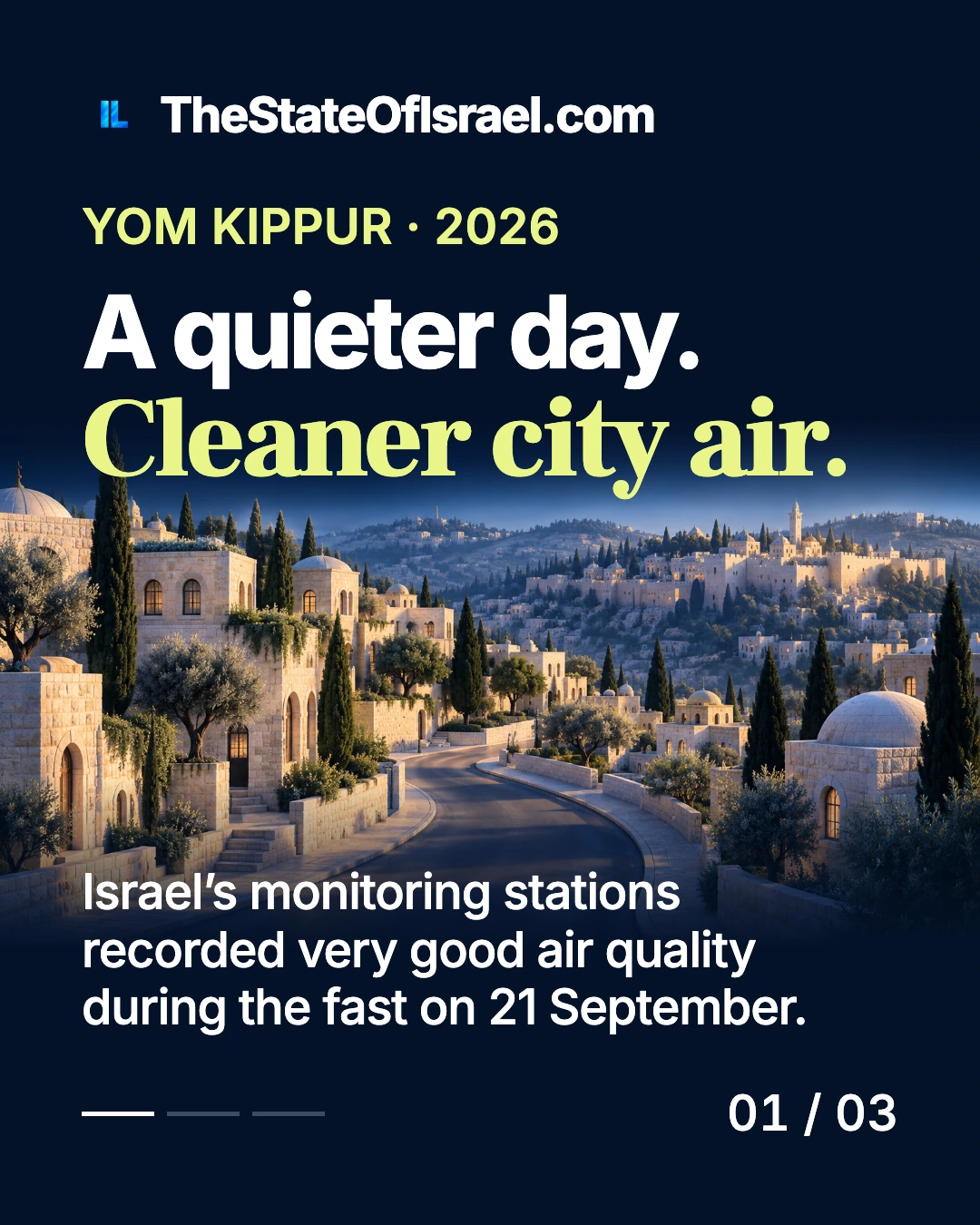

Israel’s Environmental Protection Ministry reported very good air quality across its national monitoring network during Yom Kippur on 21 September 2026. The findings describe conditions during the fast.
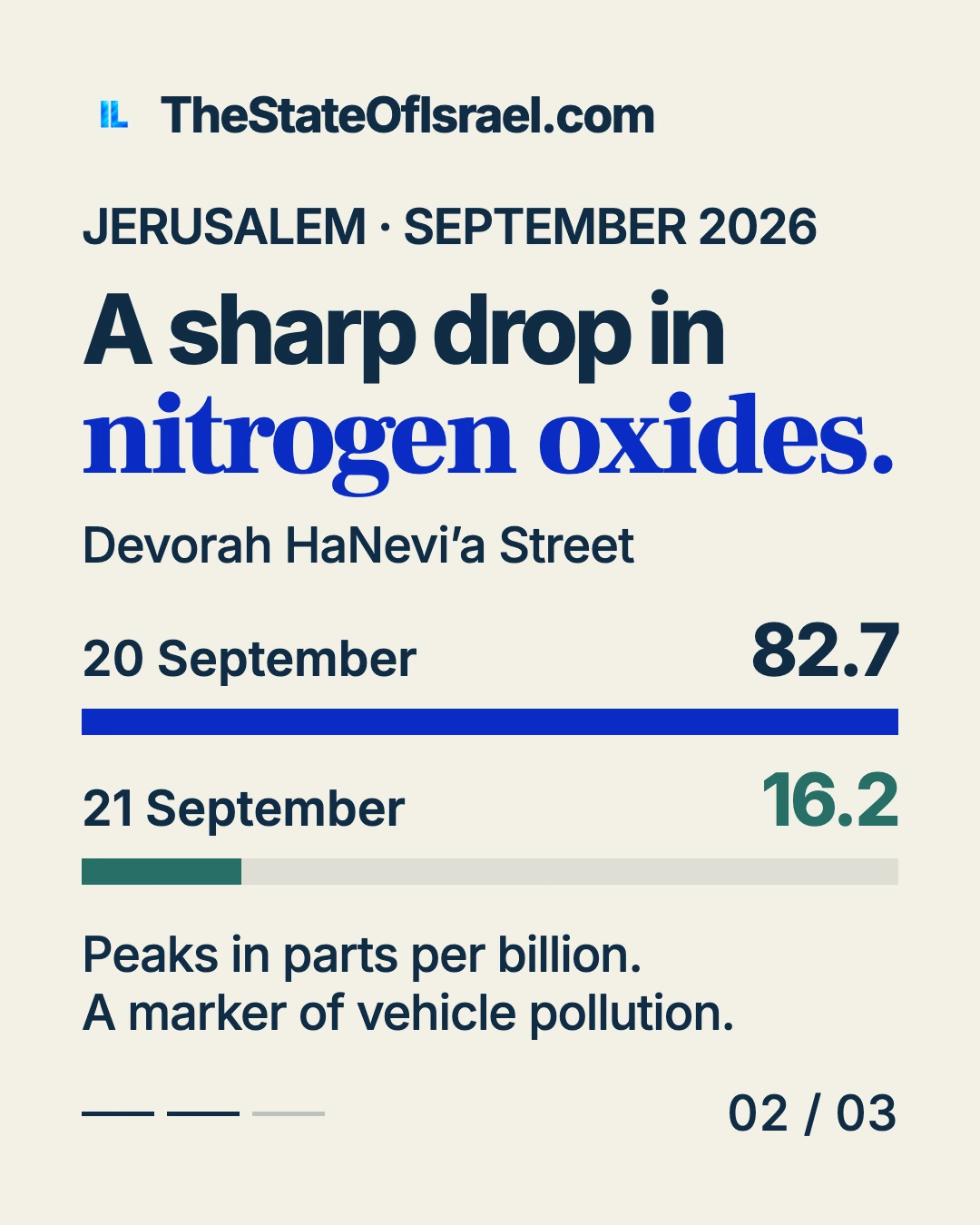
At the Devorah HaNevi’a Street monitoring station in Jerusalem, peak nitrogen oxides fell from 82.7 parts per billion on 20 September to 16.2 parts per billion on 21 September. Nitrogen oxides are a marker of vehicle pollution. The ministry linked the urban decline mainly to reduced traffic.
Westerly airflow and good dispersion also contributed to low airborne particle levels. The ministry cautioned that ozone does not necessarily fall on Yom Kippur. These are short-term measurements, not annual averages.