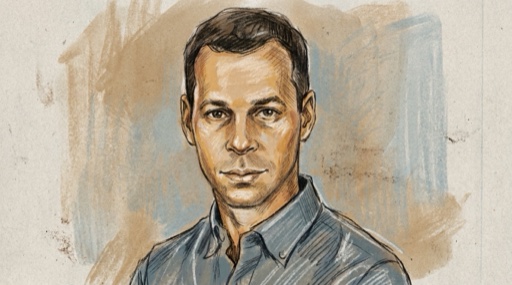
Amit Segal
@amit_segal · Israeli journalists — political, diplomatic, legal
Amit Segal is Channel 12's chief political analyst and Israel's most agenda-setting political journalist.
Bardugo’s appointment is a second slap in the face to Likud’s senior officials within a month
Translated from HebrewYou can encourage refusal to serve, you can praise reservists, but that certainly does not work together. And certainly not when it involves a sea of money being invested without proper disclosure. Not regarding the recruitment ads in Makor Rishon and not regarding the business connection to the family of Yonatan Shalev.
Translated from HebrewIf he is writing here anyway, although he doesn't do so often, perhaps Gigi will tell us about his part in Brothers in Arms and elaborate on whether he protested against the despicable refusal to serve as he protests against draft evasion, or whether he in fact enthusiastically collaborated with its organizers. He should also finally tell us transparently whether and how he was involved in the flood of advertisements in the religious-Zionist press against the conscription law, without proper disclosure and without telling us what contribution the funders of the ads about sharing the burden made to the threat to dismantle the IDF during the reform. He should explain why the connection between the managers of this campaign and the protest was concealed. And above all—if this were my character witness, I would run to check where I went wrong.
Translated from HebrewMidterm grades: Eisenkot organized the center in the best way for him, Netanyahu still has not settled the Winter question
Translated from HebrewThe latest polls teach us: there is no demand for the unity product. If they had told us a year ago that a splendid group of people would gather at the center of the political map: legendary reserve officers, reservists from every sector, bereaved families, Israeli symbols, media stars, and public-diplomacy artists. If they had told us that a group of senior politicians would gather above them—defense ministers, senior Likud figures, ambassadors to the UN. If they had told us all this, how many seats would we have estimated for the center current? 10? 15? Maybe even a ruling party? And yet the latest polls teach us that the public is not interested in the product. According to them, all the following names—Shira Shapira, Elisaf Peretz, Yosef Haddad, Netaeli Shemtov, Oren Smadja and Hazi Nahama, Dedi Simhi and, of course, the top tier: Winter, Erdan, Edelstein, Gantz, Tropper—all these names fail to cross the electoral threshold, together and separately. The frustration of the group in question grows as the polls are revealed to be a Fata Morgana: the closer they get, the farther away the electoral threshold moves. The reservists crossed the electoral threshold and then collapsed. Those same polls indicated that if they united with Tropper they would cross it—only to dive below it again. The same thing happened to Erdan, earlier to Gantz, and later to Winter. They erect a building only to discover that it was built on a leviathan that sailed away; they unite only to discover that anything multiplied by zero is zero. Even now, the illusion continues. According to the polls, about ten percent are below the electoral threshold—a staggering number of voters. Is that really the situation? Or do the fractions of a percentage point held by each party represent more of a passing mood? Whoever thinks, as before October 7, that now too everything will funnel into the question of Netanyahu, yes or no, has an easy task. He will simply explain that there was no chance from the outset. But what about those who believed there was demand for the unity product and the third way? Could it be, as the economists say, a supply-side problem? Or was it an illusion from the outset? The speed with which parties are launched into the world and then forced to align with the right or left camp, declare loyalty or commit to a framework and then evaporate, shows that this may not yet be the round for drawing conclusions. As in the 1973 elections, another round may still be required for the market ripples of the shock and the failure to strike the fortifications of the old political system and bring them down. The full column
Translated from HebrewWinter's oath: If I forget you, Jerusalem, may my right hand forget its skill, I will not sit under Bennett and Lieberman
Translated from HebrewSara Netanyahu’s statement about Yair Golan is both disgusting and unbelievably stupid in the middle of a campaign
Translated from HebrewEvery year when September first arrives, I remember this song. Good luck to Israel's sweet children, and hopefully they will know a year without wars, epidemics, and strikes. They deserve it, and so do we.
Translated from HebrewNoam Tibon supports a Palestinian state and thinks it is essential for Israel's security. In my view, that is a completely wrong and disastrous position, but it is his legitimate opinion. Why doesn't he tell his truth?
Translated from HebrewDon't miss: The senior figure in Bennett's party spoke passionately in favor of a Palestinian state—I asked him about his updated position
Translated from HebrewFirst report: Smotrich and Feiglin are in advanced talks to run in a technical bloc. Even before the failure of Netanyahu’s initiative to unite Ben Gvir’s Otzma Yehudit with Smotrich’s Religious Zionism, a completely different unification negotiation is underway: the chairman of Religious Zionism is conducting advanced talks to unite with Moshe Feiglin’s Zehut party in a technical bloc. Feiglin is expected to receive the realistic second slot, as well as slots 8 and 10, although the issue has not yet been finally clarified. Zehut under his leadership ran once, in 2019, and despite flattering polls, collapsed at the last moment below the electoral threshold with about three percent. According to the polls, it currently enjoys about one percent of the vote, which in practice justifies reserving a slot for Feiglin. The aim of the talks is to ensure crossing the electoral threshold, against the backdrop of Ofer Winter joining the race, following which Religious Zionism is weakening and is falling below the electoral threshold in most polls. Netanyahu is not privy to the talks for now, but he has heard about them and supports them in principle. Smotrich and Feiglin declined to comment specifically but confirmed that negotiations on unifications are taking place.
Translated from HebrewThe Americans have spoken over the past year with almost every lowlife in the Middle East. “The Iranians are like the don of the crime family. Hamas is his debt collector, down at the end of the chain, on a street in New Jersey.” While everyone focuses on the dons, the Americans are once again talking to the debt collectors. Allegedly, Hamas received a great prize. Jared Kushner met with senior figures of the murderous terrorist organization that murdered and kidnapped dozens of Americans on October 7. The Americans have an answer: Last year we met with them to free fifty-six hostages. Now—the kidnapped Gaza Strip. We are not quite as naive as you think, they keep repeating. We have repeatedly said that Hamas will have no weapons and no control over the Strip. The means matter less to us than the goal. People forget the meetings with Hamas leaders, they say. In the same breath they mention that a very, very senior figure in the security establishment spoke directly, by telephone, with the leaders of the Nazi organization during the negotiations to release hostages. Why are you allowed to and we are not, they say. In Israel, people are horrified by the thought that Qatar and Turkey will be involved in the Strip. Contrary to what the opposition says, the two hostile countries will not send soldiers to the Strip. But their very presence on the supervisory council, which is supposed to determine whether Israel is complying with the agreement or not, is absurd in practical and moral terms. Most of Israel’s concerns were resolved after discussions with the Americans. The remaining fear is that the international body, instead of demilitarizing Hamas, will separate the IDF from Hamas and effectively constrain Israel’s actions in the Strip. The White House is angry with Netanyahu, but it has aligned itself with most of his demands. Trump himself has conspicuously refrained for months from declaring support for him in the election. But his people are preparing Likud a victory picture: handing over weapons in the Strip to the Americans before the election. The payment, in the form of a partial withdrawal, will be on credit, after the polls close. Full column
Translated from HebrewMillions for the military advocate general in violation of the law — at our expense
Translated from HebrewGreat that the despicable monument was destroyed, too bad an MK did it and not a second lieutenant
Translated from HebrewWinter tried to defend himself in advance from Netanyahu’s attack - but he did not anticipate the intensity of the attack
Translated from HebrewWe know that Mansour Abbas supports a Palestinian state. The problem is what his party thinks about the Jewish state.
Translated from HebrewDoes Ra'am believe that all Jews are settlers? Does Mansour Abbas still believe that Zionist gangs conquered the territory of Palestine? Watch
Translated from HebrewAn unbelievable poll was published last month by Shmuel Rosner, “The Index.” The leading party among the public in the category of “dealing with crime and personal security” is, well, “Jewish Power.” Four years have passed since Ben-Gvir raced to a record electoral achievement with a promise to deal with the crisis. Since then, the murder rate has soared, crime families have divided areas of influence among themselves, the United States has issued a travel warning against the backdrop of organized crime in the country, grenades are thrown at businesses day after day, protection payments are a fixed expense like property tax and VAT—and the person best suited to deal with the national crisis is the minister during whose tenure all this happened. I don’t know why, but I was reminded of the joke about the Arab who considered voting for Kahanism, Ben-Gvir’s spiritual father, “because he was the only one who promised to deal with Arabs.” Here is a demonstration of the field in which Ben-Gvir leaves all his competitors in the dust—marketing. Yes, he has had achievements, and yes—he dramatically worsened the conditions of the terrorists in prison and distributed weapons to the public so it could defend itself, and all credit to him for that and to Vasserlauf as well. But only in a world where what people say about you matters more than what you have done can one be portrayed as Mr. Governance after such a tenure. Ben-Gvir should not be underestimated: he is the only one among all the components of the coalition whom the polls predict will surge rather than suffer a defeat. If I may hazard an assessment, the polls are still underestimating his strength. Precisely for that reason, and without being suspected of leftism, I dare say that another government with Itamar Ben-Gvir in a significant role would be a grave disaster for the country. Four years of incessant artillery fire whose purpose was to secure short-term political gain domestically have caused long-term strategic damage abroad. Our greatest friends in right-wing parties around the world find it difficult to understand why Israel gave a man like this the keys to its government at such a time. There is no Jewish community I have visited in the United States, Orthodox and right-wing as it may be, where one could not hear the difficulty of defending the Israeli government of which Ben-Gvir is a member, and quotations that made the entire journey from his X account to the other side of the ocean. He is a celebrity on a global scale, and not in a good way. His presence at the centers of decision-making is a daily attack on Israel’s standing in the world. There is no Netanyahu interview, even on the most right-wing channels, in which he is not asked about him, with Netanyahu muttering something about the Israeli system of government in which “only I decide.” And of course, the perennial question, immediately followed by: how did you get to a situation in which he is a senior minister? Read the full column
Translated from HebrewHistorically, in manual voting in primaries, turnout stands at 50–55 percent (in Labor it reached 60–70 percent in the merry days of Fouad, mostly due to fraud). In digital voting, like the kind the Democrats had, turnout rises to 85 percent or even higher. Netanyahu has historically been very afraid of cyberattacks; he had in mind interference by a foreign country to destroy the slate. After the 2022 elections, he became convinced that the move was safe. The more voters there are, the weaker the power of organized groups like Bitan and Chaim Katz becomes. So why didn't it happen this time? My guess is that Netanyahu's problem this time is דווקא the independent voters. Gottlieb, for example, doesn't appear in the deals but is strong among individual members. On the other hand, in return for securing Chaim Katz's place on the slate, he got people on his behalf into the big deal of Israel Aerospace Industries. I still think that if Likud had opened its ranks and adopted digital voting, it would have reached hundreds of thousands of voters, people from outside who don't feel like selling their souls in exchange for a deal, and a much better slate than the one that will probably be elected tonight.
Translated from HebrewIn principle, it would be good to establish a rule for life: Ottoman associations will not make decisions here.
Translated from HebrewA young and pleasant assistant was responsible for public inquiries at the Prime Minister's Office during Benjamin Netanyahu's first term, inquiries that at the time still arrived by mail and fax. His name was Gilad Erdan. A few years later, when Netanyahu was on his way to his second term in office, Erdan was elected and climbed up the list until he reached first place in Likud. When he served as interior minister, he had a young and pleasant assistant named Ofir Katz. Another decade passed, and Katz too ran for the Knesset and was elected. In these elections he is recording a rare achievement: the only Katz in Likud who did not need a reserved slot in order to be elected to a good position. Who knows, perhaps there are also people in his office planning public careers, political great-grandchildren of Netanyahu, while the great-grandfather is still with us. In the 2022 election Netanyahu committed political suicide so that Tali Gottlieb would somehow enter at the bottom of the list. In the 2026 election he is committing political suicide so that she will not finish too high. The Likud primaries, which are roughly half elections because of the reserved slots, are nevertheless the real thing: in all likelihood they will set in motion the succession struggle in Likud over Netanyahu's seat, which has been waiting patiently since the 1990s and has never been set in motion. The first generation — David Levy, Dan Meridor, Benny Begin — left Likud with a slam of the door during the first term. The second generation — Silvan Shalom, Limor Livnat and Dani Naveh — thought it would defeat Netanyahu at the start of the millennium and gradually disappeared from politics. The third generation — Sa'ar, Erdan, Kahlon — believed it would inherit him by natural succession. When that did not work out, they established parties one after another. The only one who managed to return is Sa'ar, whose faction prevented the government from falling. And so, the fourth generation — Ohana, Levin and their colleagues — will contend next Monday not only for a place on the list. It will be the launching pad for the position of the fifth chairman of Likud ever. They say this in every term, but nevertheless it seems that whether Netanyahu is elected prime minister again or loses, Likud will have a new chairman ahead of the 27th Knesset elections, as the state and the person at its head enter their ninth decade of life. In major tennis tournaments, some players have to play every match, while others, thanks to their ranking, get a favorable draw and are spared the early rounds. Therefore, and with all due respect to the primaries for the list and the question of which 20 incumbent Knesset members will be pushed out, the race for the Likud chairmanship will begin only when the list is closed, at the beginning of September. Those who reach the top will compete in it, alongside Defense Minister Katz and Foreign Minister Sa'ar (Laurel and Hardy — Sharon once called them that when they operated as a duo). And perhaps, above all, also the two figures whom Netanyahu still has to reserve in the top ten. Israeli prime ministers in general, and Netanyahu in particular, never really think about a successor, for the simple reason that none of them planned to retire. But if a weighty figure is given a reserved slot near the top of the Likud list, that will nevertheless be the closest thing to a succession decree. The reserved slot caused hysteria. The full column:
Translated from HebrewThe truth is finally being revealed (next chapter: Sinwar’s note)
Translated from HebrewBecause Netanyahu did not feel at the time that he had enough room to give up a finger in the Knesset; today, in my opinion, this is because of Barkat's litigation fund, which also finances lawsuits by people close to the hearts of people in Netanyahu's office.
Translated from Hebrew
Connected stories
- Winter Makes Service Law a Condition for Joining Next Government
- Poll Puts Eisenkot at 24 Seats, Likud at 21 and Winter at Four
- Eisenkot Says Yashar Is Preparing Merger Surprises Within Three Days
- New Poll Puts Ofer Winter Below Threshold, Right-Wing Bloc at 63
- Sara Netanyahu Questions Golan’s Early October 7 Response, Disavows Conspiracy Theories
- Netanyahu Tells Winter, Feiglin and Maoz to Merge or Withdraw
- Ofer Winter Launches Right-Wing Party, Names 10 Slate Members
- Ben Gvir Rejects Netanyahu’s Call to Unite With Smotrich
- Poll Gives Winter Five Seats as Religious Zionism Falls Below Threshold
- IDF Lets Southern Command Approve Targeted Gaza Strikes After Kushner Visit
- Katz Demands IDF Chief Strip Dismissed Military Lawyer’s Benefits
- Sukkot Demolishes Terror Memorial as IDF Says Action Was Unauthorized