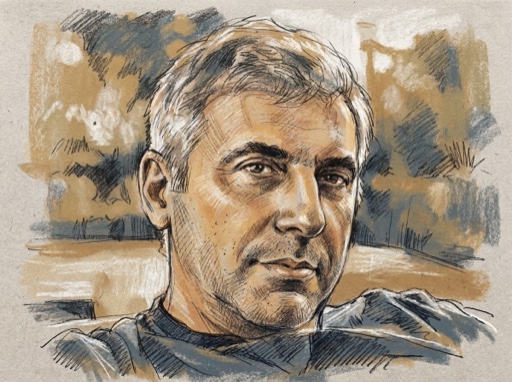
Leonid Nevzlin
@Nevzlin · Israeli opposition & former officials
Leonid Nevzlin is a Russian born Jewish politician and businessman.
Israel's National Security Council has issued a new warning for Jews and Israelis abroad ahead of Rosh Hashanah and Yom Kippur. According to the agency's assessment, Iran, Hamas, Hezbollah, and global jihadist organizations continue to seek opportunities to attack Jewish and Israeli targets around the world. The approaching anniversary of October 7 is becoming an additional risk factor. Since the start of the war, 25 Jews and Israelis have already been killed in terrorist attacks outside Israel. In the United Kingdom, preparations for the holidays are being made accordingly. Police are increasing their presence near synagogues and other Jewish sites, and in some areas armed officers are being deployed for patrols. Back in the spring, the head of London's police spoke of an unprecedented threat to British Jews and requested additional funding for hundreds of armed police officers to protect the community. After last year's attack on a synagogue in Manchester on Yom Kippur, a series of attacks on Jewish sites in London, and the continuing record-high level of antisemitism, it is difficult to call such measures excessive. Israel, meanwhile, is advising its citizens abroad to avoid displaying Jewish and Israeli symbols and to be more careful about the information they post about themselves online. In the end, preparations for the main Jewish holidays in 2026 look like this: Israel warns Jews around the world about possible terrorist attacks, while European police prepare to greet people outside synagogues with weapons. Just a few years ago, such a picture would have looked like an emergency. Today, it is gradually becoming a routine security measure. And perhaps that is the scariest thing of all.
Translated from RussianOver the past year, Tehran has pushed between $2 billion and $2.5 billion through the Chinese barter mechanism, converting oil-sale revenues into credits for Chinese goods, military equipment, and air-defense systems. The scheme, described by Reuters, allows Iran to avoid sending money through international banking channels. The scheme has been operating since 2021, but it has taken on particular importance as Washington has tightened sanctions. The financial structure is jointly managed by China’s Ministry of Commerce and Iran’s Central Bank. The financial intermediary through which the payments flow appears to exist only on paper — journalists could not find it in Chinese corporate registries. Beijing, of course, said it was “not familiar with the situation described.” This is the answer to the question of why Iran is taking an increasingly bellicose position and, it seems, is prepared to fight for a long time. The regime is not isolated to the extent Washington had expected. As long as China provides a backdoor financial corridor, the economic siege is not working at full strength. Against this backdrop, Trump’s public statements that Iran will “run out of supplies” immediately after the November elections sound unconvincing. Behind closed doors, Vice President Vance, Secretary of State Rubio, and other advisers are discussing with the president a scenario in which Iran continues to resist and the conflict drags on until the next inauguration in January 2029. Meanwhile, oil prices are rising, as is the price paid by American taxpayers and by residents of Middle Eastern countries for the half-hearted policy toward one of the bloodiest regimes of the modern era.
Translated from RussianNew research on American universities has revealed an intriguing pattern in how the accusation that Israel committed “genocide” spread in academia after October 7. The AMCHA Initiative studied 278 events held by university units at 51 U.S. universities during the 2024–2025 academic year. At events where at least one person who had supported a boycott of Israel before October 7 spoke, accusations of “genocide” were heard in 85% of cases. Where there were no such speakers, they occurred in only 2%. The difference is almost 40-fold. The chronology is even more revealing. From October 10 to 24, 2023, that is, even before the start of the IDF’s main ground operation in Gaza, 14 university units at 12 American universities accused Israel of “genocide.” And all 14 were led by people who had publicly supported an academic boycott of Israel even before the Hamas attack. For example, the University of California, Santa Cruz’s Department of Critical Race and Ethnic Studies used the phrase “Israel’s genocidal attack on Gaza” as early as October 10 — three days after the October 7 massacre. The study’s authors believe that this pattern makes it possible to trace the path of a political thesis into academia. An idea previously promoted by activists of the BDS movement began, after the war started, to be voiced by university professors, departments, and research centers as well. And along with the academic status of its supporters, it gained additional authority, since it was coming from academic circles. It is precisely the chronology that draws particular attention here. If some university units reached the conclusion that there was “genocide” just three days after October 7 and before the start of Israel’s main ground operation, to what extent was that conclusion actually the result of analyzing what was happening in Gaza? The AMCHA study does not prove that every person who subsequently used the term was motivated by political considerations. But it shows something else: a significant part of academia that later gave Israel’s accusers scholarly authority had held the corresponding political position before the war, which once again makes us consider how carefully the struggle against Israel had been planned.
Translated from RussianRussia continues to terrorize Kyiv with jet-powered drones. The Ukrainian capital has been under virtually continuous attacks since the departure of the American envoys. Moreover, Russia is striking directly at residential high-rises in the city’s most densely populated districts. And there are major problems with countering this terror. The Economist writes that production of the Geran-4 and Geran-5 UAVs — modifications of the Iranian Shaheds — has reached 3,000 units per month. China supplies most of their turbojet engines, while some are produced in Russia using 3D printers smuggled in from the West. At the same time, Ukraine’s F-16s engaged in defending against air attacks are running out of American AIM-120 and AIM-9 missiles, which are also needed to intercept ordinary cruise missiles. The situation is even worse with the ballistic threat. Stocks of Patriot PAC-3 interceptors, which work effectively against this class of targets, are practically exhausted. And Russia has accelerated ballistic-missile production to approximately 100 per month. “No one wants to give up their interceptors when the prospects of quickly replenishing them are practically nonexistent,” the publication writes, recalling the expenditure of American Patriot stocks on the war with Iran. Experts interviewed by the publication confirm what I have already written about more than once. Under these conditions, Ukraine needs to develop a strategy of destroying the threat before launch: increase production of its own long-range missiles capable of effectively striking military plants in Russia and mobile launchers, and systematically hit critical links in Russian production chains. Mass-producing ballistic missiles is cheaper and easier than manufacturing enough interceptors to destroy them. Under unceasing strikes, this is objectively a difficult task for Ukraine. The countries of the civilized world can and must help Kyiv solve this problem. Otherwise, if an effective air-defense and missile-defense system cannot be established, the coming winter will be even more terrifying. Without enough anti-missiles and without effective countermeasures against jet-powered drones, restoring energy facilities under constant repeated strikes may become an insurmountable task.
Translated from RussianFrance, the United Kingdom, and ten more states have imposed sanctions on trade in goods from Jewish settlements in the West Bank. In response, Israel closed the British consulate in East Jerusalem, expelled British military representatives, and banned 12 British officials from entering. But the most important thing in this story is not Europe’s actions (and those of Canada, which joined it), but America’s inaction. According to Axios, the Trump administration did not oppose the British initiative. The White House silently watched as twelve Western countries imposed sanctions on Israeli settlements—and did not object. This is more important than any European statements. Trump is the only ally Netanyahu really took into account. Now Trump is signaling that settlement policy is becoming a problem for U.S.-Israel relations. On Sunday, clearly under pressure from the approaching sanctions, Netanyahu ordered the demolition of about 100 illegal outposts. He also condemned settler violence, although he attributed it to a handful of radicals. However, it is obvious that the government, in which the “handful of radicals” has representatives, does not intend to take any serious steps. On the eve of the October 27 election, Israeli voters have the right to ask: Is a policy that isolates the country even from its closest allies worth the consequences to which it leads?
Translated from Russian"Haaretz" is publishing a large-scale investigation into what happened in the days, weeks, and months before October 7. The material is based on dozens of sources, internal documents, and recordings of conversations. I recommend reading it in full, although it is not easy reading. It turns out that a week and a half before the October 7 massacre, UAE President Mohamed bin Zayed personally called Netanyahu and warned him: Sinwar was preparing a major operation against Israel. The conversation lasted 45 minutes. Netanyahu reacted calmly. His assessment: Hamas intended to act in the West Bank. The heads of the Shin Bet and the Mossad and the IDF chief of staff did not even learn of this warning. At the same time, it is emerging that even before the war between Israel and Hamas, there had been real negotiations for a long-term settlement—through Egyptian and Qatari mediators, Mohammed Dahlan, and also through a direct channel between a Shin Bet employee and a Hamas official. The atmosphere had been fairly optimistic. But Netanyahu repeatedly postponed convening the hostages’ cabinet, whose agreement was required to move forward. In mid-September 2023, a Palestinian mediator met with Sinwar in person. He uttered the word “zilzal”—earthquake—and asked him to convey to the Israelis: “I am preparing the mother of all surprises. Something extraordinary.” The mediator passed this warning on to Israel. On September 15, the information reached Shin Bet chief Ronen Bar. An operational meeting was convened at the level of the chief of staff with the Defense Ministry and military intelligence. No decisions were made. A journalistic investigation cannot replace a state commission. But neither can a political commission under Netanyahu’s control replace it. Three years have passed since October 7. Israelis deserve to know how this tragedy became possible.
Translated from Russian"Haaretz" is publishing a large-scale investigation into what happened in the days, weeks, and months before October 7. The piece is based on dozens of sources, internal documents, and recordings of conversations. I recommend reading it in full, although it is not an easy read. It turns out that, a month and a half before the October 7 massacre, UAE President Mohamed bin Zayed personally called Netanyahu and warned him: Sinwar is preparing a major operation against Israel. The conversation lasted 45 minutes. Netanyahu reacted calmly. His assessment: Hamas intends to act in the West Bank. The heads of the Shin Bet and Mossad and the chief of staff did not even learn of this warning. At the same time, it is emerging that even before the war between Israel and Hamas, genuine negotiations on a long-term settlement were taking place—through Egyptian and Qatari mediators, Mohammed Dahlan, and also through a direct channel between a Shin Bet employee and a Hamas official. The atmosphere was fairly optimistic. But Netanyahu repeatedly postponed convening the hostage cabinet, whose consent was required to move forward. In mid-September 2023, a Palestinian mediator met with Sinwar in person. He uttered the word “zilzal”—earthquake—and asked that the following be conveyed to the Israelis: “I am preparing the mother of all surprises. Something extraordinary.” The mediator passed this warning on to Israel. On September 15, the information reached Shin Bet chief Ronen Bar. An operational meeting was convened at the level of the chief of staff with the Defense Ministry and military intelligence. No decisions were made. A journalistic investigation cannot replace a state commission of inquiry. But neither can a political commission under Netanyahu’s control replace it. Three years have passed since October 7. Israelis deserve to know how this tragedy became possible.
Translated from RussianAs soon as Trump's emissaries left Kyiv, Russia immediately set about terrorizing the city with every means at its disposal. This night, the Ukrainian capital came under attack from cruise missiles, ballistic missiles, and jet-powered Shaheds alike. Putin's troops struck residential neighborhoods and civilian facilities — two people are known to have been killed and seven injured. Ukraine's air defenses managed to fend off the Shahed and cruise-missile raid quite effectively, which cannot be said of the ballistic missiles — only two of them were intercepted. This remains the main problem, especially in the context of the coming winter. Usually, in mid-October, Russia begins a campaign of strikes against the energy sector, and before then it is vitally necessary to supply Ukraine with interceptor missiles capable of intercepting ballistic targets. The modernized Iranian Shaheds, whose production Moscow has scaled up with Chinese assistance, are no less important a problem. And this is not a problem for Ukraine alone. With another escalation of the war in the Middle East, this technology could become a tremendous problem for the countries of our region. Moscow will certainly share this weapon of terror with Tehran. Israel and the Gulf monarchies should immediately begin cooperating with the Ukrainians to solve this problem.
Translated from RussianAfter October 7, France faced a rather frightening paradox. It is a country that spent decades learning to acknowledge its own responsibility for the antisemitism of the past. France acknowledged the responsibility of the Vichy regime for the deportation of Jews, made denial of crimes against humanity a criminal offense, and this summer held, for the first time, a National Day of Remembrance recognizing Alfred Dreyfus's innocence. Plaques bearing the names of Jewish children who were once taken to death camps hang on the walls of French schools. The state did a great deal to ensure that something like this could never again become the norm. But right now, French Jews are once again living in a country with a record level of antisemitism. In 2023, the number of recorded antisemitic acts rose by a full 284%, to 1,676 cases. In 2024, there were more than 1,570: the sharp surge after October 7 did not disappear with the first months of the war. And in March of this year, the French human rights commission acknowledged that the state plan to combat racism and antisemitism for 2023–2026 had been implemented extremely poorly: the Interior Ministry had not fully carried out a single one of the measures assigned to it. This produces a strange situation. France preserves the memory of Dreyfus and the deported children, installs memorial plaques, and recognizes the crimes of the Vichy government. But memory has meaning only when it changes the present. It is impossible to say “never again” exclusively about dead Jews if the living once again have to think about whether it is safe to show their identity. One of these memorial plaques in Paris says: “Ne les oublions jamais” — “We will never forget them.” And perhaps today it is especially important for France to remember that this phrase refers not only to the past. The memory of those who died also serves, among other things, to ensure that one day there will be no need to install new plaques.
Translated from RussianThe newspaper Maariv publishes alarming poll data: 40% of Israelis believe that there was a “betrayal from within” on October 7, 2023. Another 16% are unsure. In total, more than half the country either believes in a conspiracy theory or allows for it. Among coalition voters, the figure is even higher — 61% believe in the conspiracy theory. Conspiracy theories about October 7 are destroying the little that can still unite Israeli society: a shared memory of the tragedy, a shared demand for accountability, and a demand for the truth. But when almost half the country believes that the catastrophe was prepared by someone “from within,” neither a normal investigation nor a normal political dialogue becomes possible. But there is nothing surprising about these figures — if one takes into account who spreads such ideas. In a television interview (naturally, on the “tame” Channel 14), Sara Netanyahu hinted that Yair Golan — former deputy chief of the General Staff and current leader of the Democrats party — had supposedly been “already dressed and ready” early on the morning of October 7, “while others, including the prime minister, knew nothing.” It is worth noting that these insinuations provoked a wave of criticism from a wide range of political and public figures, and even Golan’s political opponents expressed their support for him. But Sara Netanyahu’s words were addressed not to them, but to the 40 + 16% who allow for a conspiracy of generals, “Kaplanists,” and traitors. The fact that the prime minister’s wife is spreading conspiracy theories about the catastrophe for which her husband bears direct political responsibility is no coincidence. This is an election strategy: to shift public attention from the question “why did the country’s defense fail” to the question “who betrayed us.” As long as the country searches for traitors, it does not search for those responsible.
Translated from RussianThe Financial Times has published a report that cannot be ignored. Russia secretly helped Iran develop hypersonic cruise missiles. The program, codenamed C430L, began in 2023 and continued at the height of the American-Israeli war with Iran. Russia’s best missile engineers worked to give Tehran a weapon capable of sinking American aircraft carriers and striking Israeli cities. This is the final touch to the picture of an alliance between two terrorist states. Putin sent Shahed drones to kill Ukrainians in Kyiv. Iran supplied those drones to Russia. Russia passed intelligence to Iran about the movements of American forces. Now it turns out that Moscow also helped Tehran create missiles. This is an alliance against the United States, against Israel, against the entire free world. And here is a fundamental question that our current leaders prefer to avoid. Ukraine and Israel are fighting the same enemy. Russia is killing Ukrainians and arming those who kill Israelis. Documents obtained by the FT confirm what has long been obvious to analysts: the Moscow–Tehran axis operates as a single military mechanism. Under Netanyahu, Israel spent years avoiding taking a clear position—it did not supply Ukraine with weapons, did not call Russia the aggressor, and courted Moscow for the sake of illusory dividends. We are still paying for that policy to this day. Ukraine and Israel are natural allies. A common enemy, common values, and a common interest in breaking this axis. It is finally time to act on this reality, rather than on the illusions that one can “be friends” with Putin while he arms those who want to destroy us.
Translated from RussianIsraeli scholars have found a way to fight the academic boycott. UCLA Professor Judea Pearl and his colleagues propose a new tactic: before accepting an invitation from a foreign university, conference, or scientific organization, an Israeli researcher asks for confirmation that the institution does not participate in the boycott of Israel. If there is no such confirmation, the scientist himself refuses the collaboration. Such an initiative is quite understandable. After October 7, the academic boycott of Israel has noticeably intensified. Israeli scholars face canceled invitations, the termination of joint research, and refusals to collaborate. Moreover, the boycott is far from always officially documented. Sometimes foreign colleagues simply stop responding, invitations suddenly disappear, and collaboration ends without explanation. That is why it is already being called a “quiet boycott.” The absurdity of the situation is that political grievances against Israel are transferred to people whose work may have nothing at all to do with either the government or the war. A physicist, doctor, or mathematician is excluded from international collaboration not because of the quality of his research, but because of the country in which he works. And at that point, opposition to the state’s policies turns into ordinary discrimination on the basis of nationality. Now Israeli scholars are proposing that people stop pretending that nothing is happening. If a university considers it acceptable to boycott colleagues solely because they belong to the Israeli academic community, it should be prepared to say so openly. Perhaps publicity itself will prove to be the most effective way to combat the “quiet boycott”: it is one thing to quietly close the door on an Israeli scholar and quite another to explain to the entire academic community why his nationality has suddenly become a criterion for scientific collaboration.
Translated from RussianPolitico writes about the mood in the Republican Party toward Iran six months after the war began. The main conclusion: Republicans are tired of and disappointed by Donald Trump’s chaotic and inconsistent actions — both factions at the same time. Treasury Secretary Scott Bessent announces an “economic D-Day” and says the sanctions are intended to make military escalation unnecessary. At the same moment, Trump threatens to blow Iran’s energy infrastructure to pieces. Vice President J. D. Vance tries to explain that this is one strategy, but he himself hardly believes what he is saying. Those who wanted a tough military solution are unhappy that the threats remain only threats. Those who are more concerned about gas prices on the eve of the midterm elections are unhappy that the war, which was supposed to last six weeks, has already continued for half a year. A source close to the White House acknowledges that Trump understands the political danger but cannot find a dignified way out of the situation. And the Iranians understand this no less well than he does.
Translated from RussianSaudi Arabia, Turkey, and Pakistan held the first meeting in Istanbul of the new “Mecca Pact” — a military alliance modeled on NATO, with joint defense, intelligence sharing, and the principle of collective security. Six or seven other Muslim countries have already expressed interest in joining the alliance. A new security architecture is taking shape in the Middle East. Israel is not part of it. And that is paradoxical. The war with Iran created a rare window. Saudi Arabia and other Gulf countries came under Iranian strikes. They and Israel have one enemy — that should have become the basis for a rapprochement that would go far beyond tacit coordination. Israel obviously has something to offer. The UAE, which normalized relations with us במסגרת the Abraham Accords, received Iron Dome. Close technical and intelligence cooperation between the countries of the region and Israel could become part of a unified defense system against the Iranian threat. Instead, Saudi Arabia prefers to unite with Turkey and Pakistan — countries that clearly do not intend to wage war with Iran. Whether this calculation is justified, time will tell. But the more important question is: Is Israel doing enough to build parallel relations with the countries of the region — bilaterally, within the framework of the Abraham Accords, or beyond them? Normalization with Saudi Arabia remains frozen — largely because Netanyahu has become so toxic that strengthening relations is out of the question. But the next government must make every effort to become a partner of moderate Arab countries in repelling regional and global threats.
Translated from RussianI want to draw your attention to an article by my friend Chaim Ben-Yaakov—the father of Yuval, a soldier who died in the first hours of October 7. I recommend reading it in full. Chaim writes that the rise of antisemitism is not a Jewish problem, but a symptom of a deeper ailment of Western democracies: the loss of moral language, the ability to call evil evil without looking to political advantage. Ben-Yaakov writes that October 7 exposed not a new problem, but one that had been growing for a long time. The largest mass murder of Jews since the Holocaust did not produce a moral consensus. Even before the victims were buried and the hostages counted, “explanations,” arguments about context, and justifications of terror appeared. And this is not a disagreement over Middle Eastern policy, but an inability to make the elementary distinction between understanding a conflict and justifying the intentional murder of civilians. Viktor Frankl once spoke of an “existential vacuum”: an emptiness that arises when freedom is severed from responsibility. This is exactly what is happening today with Western societies. There is no need to recall the historical examples of where this leads. At least, not for Jews.
Translated from RussianIn the village of Qusra in the northern West Bank, dozens of settlers attacked Palestinians, pelted them with stones, and barricaded themselves in someone else’s home while people were inside. In neighboring Jalud, masked settlers attacked an NBC news crew. This happened after several weeks of escalating violence in the same area. Netanyahu condemned what happened. But the condemnation sounds unconvincing against the backdrop of settler violence in the West Bank continuing for years — and in recent weeks even getting completely out of control. The question is not whether the government condemns settler violence in words, but why it continues and intensifies despite those words. There are two possible answers here — and both are grim. Either the Netanyahu government does not control parts of the settler movement that operate as armed groups outside the law. Or — and this is worse — it is not interested in stopping them. On the eve of elections, tough measures against settlers are politically toxic, since Netanyahu will have to rely on their representatives in the next coalition as well — if, of course, he is tasked with forming it. Both explanations may be true at the same time — and that is the third and most dangerous option.
Translated from RussianAccording to U.S. intelligence, the Kremlin believes that the United States has been weakened by the war with Iran and sees this as an opportunity to step up actions against American interests and allies in Europe. As WP writes, it was the acquisition of this information that preceded the CIA chief’s trip to Moscow. However, sources familiar with the intelligence on Putin’s assessment of Washington’s strategic position did not provide details about how this information was obtained or how confident CIA analysts are in its reliability. However, according to one of the journalists’ sources, Ratcliffe’s trip to Moscow was connected “less with the fact that Putin had been cornered” because his army was unable to overcome the stalemate on the Ukrainian front, “than with the fact that Russia considers U.S. resources exhausted and believes that we cannot intervene.” Ratcliffe, of course, told Putin’s accomplices that if they undertook a significant escalation of the war in Ukraine, it would push Donald Trump toward closer ties with Volodymyr Zelenskyy. But since yesterday, the air-raid siren has sounded more than 20 times in Kyiv, and shelling of the capital region has continued for about 40 hours. The Russian Federation is striking civilian targets — 18 warehouses, dozens of private homes, apartment buildings, and cars have already been attacked. And the announced “rapprochement” is nowhere to be seen yet. Putin is a war criminal, but his assessments regarding the United States are not far from the truth. Moreover, he himself did everything to weaken Washington in Iran by providing military assistance to the ayatollahs’ regime. The Americans have the ability to respond appropriately and strengthen their positions — it is enough to help Ukraine carry out strikes on Russia’s military factories and missile launch ranges, using that same Starlink.
Translated from RussianMore than one hundred former British and French diplomats demanded that their governments increase pressure on Israel. In an open letter to Emmanuel Macron and British Prime Minister Andy Burnham, they call for stopping arms supplies to Israel, suspending trade agreements with it, and banning trade with Israeli settlements. The authors accuse the Netanyahu government of trying to prevent the creation of a Palestinian state and state that “Palestine is being erased before our eyes.” Hamas’s crimes are mentioned in the letter, but Israel once again becomes the central target of pressure. The former diplomats propose concrete measures capable of harming Israel’s trade, military cooperation, and international ties. In effect, Israel is being asked to pay for continuing the war through growing political and economic isolation. And this clearly shows how much the European discussion about Israel has changed since October 7. The country suffered the largest terrorist attack in its history, hundreds of people were taken hostage, yet almost three years later it is increasingly Israel that is being asked for concessions under threat of sanctions and boycotts. Hamas’s responsibility is formally acknowledged, but practical pressure is directed above all at the state that continues to deal with the consequences of its attack. It is especially telling that such demands now come not only from street activists, but from people who represented Britain and France on the international stage for decades. The anti-Israel agenda is gradually moving from slogans and rallies to proposals for concrete government policy. And the more familiar the idea of isolating Israel becomes in Europe, the less room remains for asking why the country found itself in this war in the first place.
Translated from RussianThe Russian threat to the Baltic states was among the issues discussed during CIA Director John Ratcliffe’s unexpected arrival in Moscow. As both the Wall Street Journal and Politico write, he warned Putin’s henchmen that escalation of the conflict with U.S. allies in NATO was unacceptable. But there was another issue. In Moscow, Ratcliffe discussed not only the war in Europe, but also urged Russia to reduce its military and economic support for Iran. Washington wants Moscow to stop transferring weapons and defense technologies to Iran. In addition, Ratcliffe recommended that the Russian side not react excessively if American sanctions affect Russia. At the same time, Kremlin-linked sources leaked information to Bloomberg that Russia is preparing to intensify attacks on Ukraine, allegedly because negotiations on a peace agreement had reached a deadlock. The agency reported that Moscow was considering intensifying strikes with conventional ballistic missiles against Kyiv, including the center of the capital, as well as infrastructure targets in other cities. Moreover, the Russian sources speaking to journalists returned to Putin’s favorite scare story: according to them, the escalation of reciprocal strikes is leading more and more Russian officials to conclude that Putin may ultimately decide to use tactical nuclear weapons in Ukraine. Although experts say that this risk remains extremely low and see no signs of corresponding preparations. All this Moscow blather about negotiations having reached a deadlock is another lie. Serious negotiations never even began. But there can be no doubt about the coordination of the actions of Russia, Iran and, apparently, North Korea against the civilized world. The dictatorships understand the full depth of the global problem that has emerged and are trying to exploit it to the fullest, engaging in intimidation and extortion.
Translated from RussianChina is modernizing Iran’s weapons of terror — Shahed-type drones —, a process being carried out by Putin’s Russia. These drones can now reach a speed roughly three times higher than earlier versions. As the Wall Street Journal writes, citing data from Ukrainian officials, it was Chinese factories that supplied the engines needed to achieve these figures. According to current and former American officials and analysts, China has long been the most important supply center for Shahed components, including engine parts and gyroscopes. This is part of a complex global supply chain that, analysts say, enabled Iran to develop and spread one of the most significant military innovations of the modern era: cheap flying killing machines that create serious problems for the United States and its allies, increase the number of civilian casualties in Ukraine, and undermine America’s military advantage in the Middle East, the publication says. In developing the Shaheds, Iran used a design originally created by the United States and Germany. But producing them required Tehran to purchase parts from around the world, including from Western countries and China. At the same time, even Western components were often routed through front companies in mainland China or Hong Kong. Experts assert that over time many of them were replaced with Chinese-made parts. China and India have presented their own versions of such aircraft. According to the Americans, Iran also sold its drone technology to Venezuela, Syria, and Ethiopia, while Russia’s Africa Corps used Shaheds in Mali. Military analysts claim that “in the not-too-distant future, we will see these things everywhere.” And that is pure truth. Only the Ukrainians know how to fight these things effectively on the battlefield. Moreover, under the heaviest blows, they have been engaged in a genuine technological race with Russia for a fifth year. Their experience is vital to Israel and the entire Middle East, where the active use of these weapons has already become a reality.
Translated from RussianIranian agents planned to kill Yair Netanyahu. According to American law-enforcement sources, IRGC operatives were already in Florida, surveilling his home and tracking his movements. Israeli intelligence learned of this in December 2025. Yair was ordered to leave the country immediately — he flew to Israel. Newsmax reports this. Netanyahu himself recently confirmed that Iran had tried to kill one of his sons. Yair Netanyahu is a controversial figure. His behavior on social media and his lifestyle raise legitimate questions, and criticism of him is often justified. But that has nothing to do with what happened. The Iranian regime planned a murder in the United States. The same regime that finances Hezbollah and the Houthis, has killed journalists and dissidents around the world, and organized terrorist attacks from Buenos Aires to London — planned to kill the sitting prime minister’s son on American soil. And it is not even about the fact that family is sacred. It is about the principles by which the state is guided in its struggle — and the methods it resorts to. The targeted “hunt” for Netanyahu’s son is yet another proof of the terrorist nature of the Iranian regime, which recognizes neither state borders nor any moral constraints.
Translated from RussianSweden’s Minister of Education and Integration and leader of the Liberal Party, Simona Mohamsson, came to a pre-election television debate wearing a Star of David around her neck. “I wear the Star of David for the children who do not dare to do so in today’s Sweden,” she explained her action. After the broadcast, the politician received a stream of insults and threats on social media. The origin of Mohamsson herself is especially symbolic. Her father is a Palestinian born in Haifa, and her mother is Lebanese. At the same time, the minister speaks openly about the rise of antisemitism in Sweden and criticizes politicians who fuel it. She previously said that the problem had already reached schools: it is becoming harder for teachers to talk with children about the Holocaust and contemporary antisemitism, while some students respond to these subjects with denial or attempts to diminish them. And the problem really does exist. In 2024, Sweden registered more than 200 antisemitic crimes, compared with 111 in 2022. Last year, hanging figures with Stars of David on their chests appeared in Umeå. Against this backdrop, Mohamsson’s words about children who are afraid to wear the Jewish symbol openly are not merely a beautiful gesture, but a strong political statement. Against the backdrop of European politics in recent years, Mohamsson’s action looks especially telling. The politician of Palestinian origin did not need to choose between sympathy for Palestinians and protecting Jews from hatred. She simply acknowledged the obvious: no war in the Middle East should become a reason for a Jewish child in Sweden to be afraid to show that they are Jewish. And perhaps this is precisely the kind of position that many European politicians are especially lacking today.
Translated from RussianU.S. Treasury Secretary Scott Bessent announced the start of an “economic D-Day” against Iran — “the largest financial operation ever undertaken” against any country. The aim, he said, is to “cut every economic artery feeding the regime until Tehran is left alone.” The Iranian rial had already fallen to a historic low the day before — nearly 2 million to the dollar. The head of Iran’s Central Bank admitted: oil exports have “effectively stopped.” The UAE — one of Tehran’s main trading partners — froze all financial operations with Iran until further notice. Iran nevertheless intends to resist — Foreign Minister Abbas Araghchi wrote that Tehran will increase trade with China’s allies and use BRICS and the SCO to circumvent Western pressure. China has already stated that American sanctions “will not work.” In Iran, they hope the sanctions regime will not last longer than Donald Trump’s term in office (the U.S. presidential election will take place in 2028). Perhaps. But for the first time in a long while, it feels as though the economic vise is genuinely tightening. We will see whether there is enough consistency this time. If so, the Iranian regime may not make it to 2028.
Translated from Russian"This week, Ukrainians will be marking Independence Day. Under normal circumstances, August 24 is a day of celebration, a day when we remember the moment when Ukraine restored its sovereignty and chose its own path as a free European nation. But once again we are marking our independence while fighting to preserve it... If viewed from Israel, there is a dimension of this war that cannot be ignored. Kyiv and Tel Aviv are closer to each other than they may appear on a map. Over these years, Ukrainians have learned to recognize the sound of drones approaching their cities. Israelis know that sound well too. They know what it means to wake up to sirens. They know what it means to lead children to shelters in the middle of the night. They know this strange reality, when in the morning you have to go to work after a night spent wondering whether a missile will hit your neighborhood. Ukraine and Israel are fighting different wars, against different enemies and under different circumstances. These differences matter, and they should not be erased. But there is also a lesson that unites our experience. The security threats faced by democratic countries are no longer confined to national borders". Read more about this in the article by Ukraine's ambassador to Israel, Yevhen Korniychuk
Translated from RussianThe Russian Federation continues to expand its capabilities to strike Ukraine with ballistic missiles amid a total shortage of means to intercept them. Ukraine's Main Directorate of Intelligence confirmed that, as of July 2026, North Korea had transferred about 50 KN-23, KN-24, and KN-30 ballistic missiles to Russia. At the same time, the KN-30 can carry a warhead weighing up to 2,500 kilograms, and ISW experts have so far found no evidence that this type of weapon has been used against Ukraine. Russia has also begun deploying six launchers for North Korean weapons in Voronezh Oblast. They will be able to launch a total of 120 missiles, which could strike the Sumy, Kharkiv, Chernihiv, Poltava, Kyiv, Dnipropetrovsk, and Zaporizhzhia oblasts. Analysts note that Russian Iskanders have an accuracy of five to 20 meters, whereas North Korean KN-23s regularly deviate from their targets by hundreds of meters or even kilometers. At the same time, they carry a significantly heavier warhead weighing up to one ton, compared with the standard 480-kilogram warhead of Russian missiles. Judging by these data, North Korean missiles are now ordinary weapons of indiscriminate terror. Iranian Shaheds were once the same kind of weapon, only less powerful. Russian forces carried out a deep modernization of them, created jet-powered versions, and developed new methods of use. They will probably follow the same path with North Korean missiles. Iranian drones have now become a serious problem for the Middle East and the entire global economy. It is easy to imagine what the improved North Korean missiles could be used for besides the war against Ukraine. There is still no response.
Translated from Russian
Connected stories
- Trump Says Iran War Will End Immediately After U.S. Midterms
- Vance and Rubio Warn Trump Iran War Could Last Beyond His Term
- Israel Orders UK Consulate Closure, Ends British Gaza and PA Roles
- UK Announces Import Ban and Sanctions Regime Targeting Settlement Trade
- Bennett Says He Knows UAE Warning to Netanyahu Was Genuine
- Four Opposition Leaders Pledge Oct. 7 State Inquiry After UAE Warning Report
- UAE Leader Warned Netanyahu of Hamas Move Before October 7, Report Says
- UAE Says It Does Not Comment on Reports About Leaders’ Conversations
- Sara Netanyahu Questions Golan’s Early October 7 Response, Disavows Conspiracy Theories
- Netanyahu’s Office Says He Ordered Full Mobilization at 9:55 on October 7
- U.S.-Israel War With Iran Reaches Six-Month Mark
- IDF Removes Dozens of Israeli Rioters From Palestinian Home in Qusra