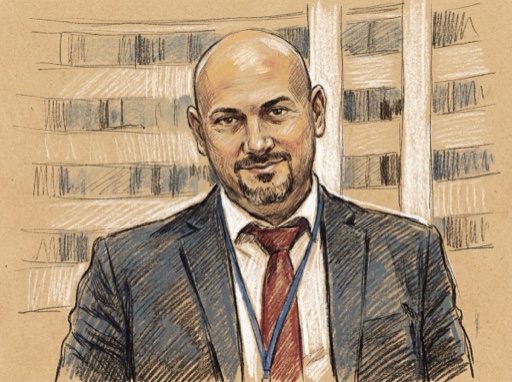
Ali Hashem
@Alihashem · Gulf & Arab world
Ali Hashem is a journalist for Amwaj and Al Jazeera on the Iran and Hezbollah beat.
Activating the Strait of Hormuz gave the Iranians an unprecedented card. Hormuz carried half the war on its back, with the weight it holds in the realms of the economy and energy security. I wrote about how Iran rearranged its three layers of defense after the old balance of deterrence collapsed. My new article for @AljadahMedia
Translated from ArabicMy latest for @ForeignPolicy, how the war has changed Iran’s deterrence policy? For decades Tehran's first line of defense was the "axis of resistance," arming allies to keep war away from Iran's own borders. Oct. 7 ended that logic. What replaces it starts inside Iran's own borders. https://t.co/ipr34l82Gq
Yesterday’s exchange confirms that Washington isn’t seeking a prolonged war with Iran. Trump wants a controlled siege, enough pressure to erode Iran’s leverage over the Strait without a full-blown campaign. The longer Iran stays locked in reaction mode, the weaker its bargaining chips become. Expect more rounds like this. Washington’s goal isn’t just safe passage through Hormuz, it’s normalising the wider regional order, for the Gulf states and beyond. As long as Iran plays by Washington’s rules of engagement, its options stay narrow. This is a no-war-no-peace equilibrium. It could easily outlast the midterms, and run into next year.
Six months ago, I wrote this for @ForeignPolicy: “Iran Is Becoming America’s Ukraine” The shift to an attritional war focused on energy infrastructure risks becoming a quagmire. My argument was that the danger isn’t a bigger war, but rather a longer one, and the real question wouldn’t be who strikes hardest, but who can endure longest, and how much strain the global system could absorb before it too became part of the conflict. Half a year later, what looked in March like a possible drift toward attrition has largely become one. The Ukraine comparison was never about geography or alliance, it was about the mechanics of a war that outlasts the assumptions that started it. Worth rereading with that in mind: https://t.co/5BDnlv12Jt
At least two people killed and several injured in the U.S. attack on the wedding in Sirik.
Several people are reported to have been injured after shrapnel from a U.S. attack struck a wedding ceremony in Sirik, southern Iran.
Worth flagging: this isn’t a new missile, the Khaybar Shekan has been used on several occasions before. What may be new is an upgrade to it over the past months, which would be significant if confirmed.
The U.S. warns its citizens in the region of potential flight cancellations, airspace closures, and travel disruptions, calling on Americans currently in the Middle East to exercise heightened vigilance.
A senior Iranian official told me the talks with Field Marshal Asim Munir were constructive, with useful ideas exchanged, though no messages were passed in either direction. The visit was aimed at reviving Pakistan’s role as a mediator between Iran and the U.S. https://t.co/jQMRzDKRRr
Iran’s FM spokesman @IRIMFA_SPOX confirms that Pakistani Field Marshal Asim Munir will travel to Tehran on Monday leading a high-ranking delegation. According to Esmail Baghaei, Munir will meet and hold talks with senior officials of the country.
According to my sources, the visit is meant to reactivate the mediation between the U.S. and Iran.
Highly informed sources told me that Field Marshal Asim Munir, Pakistan’s first Chief of Defence Forces, is expected to return to Tehran within the coming couple of days.
Introduction to the book America and Iran… Messages and Cannons: "It is more like a train route whose fixed stations follow one another. We may differ in how we interpret them, but their temporal coordinates do not change. As soon as one of its cycles is complete, another begins, carrying within it the ghosts of the past."
Translated from ArabicOne of the books that makes a real difference in understanding the long, winding relationship between America and Iran. The value of this book lies in the research that @JohnGhazvinian conducted over the years during which he wrote this relatively large volume; it contains archival material written in a narrative style that makes reading it a genuine pleasure. I read it in English when it was published, and reread it in Arabic when my translator colleague had finished it—a journey through successive chapters and pivotal events that tells us that what lies between America and Iran is not only the Mossadegh coup, the hostage crisis, and the Contras, but a history going back three centuries. Below, I will share with you a look at my introduction as the publisher of this book, which I wrote on my way to cover the latest war in Iran. To be continued…
Translated from ArabicA very difficult story to cover. Few months ago, we passed through Mansouri on our way to Naqoura without a second thought. Today, both are occupied by Israel. People from the area now stand at the closest point they can reach, looking across at their homes and lands. I stood with them, looking towards my own village, the closest I can get to my father’s grave. My report for Al Jazeera @AJEnglish
The sixty-day period in the memorandum of understanding between the United States and Iran has come to an end. What happened? Nothing conclusive so far. No real negotiations, and no return to a full-scale war. A few messages, a few missiles, and a great deal of escalation. Iranian officials say: The memorandum of understanding does not provide for a ceasefire, but rather an end to hostilities on all fronts, including Lebanon—in other words, an end to the war as it stood. The sixty days concerned only negotiations over the final agreement, nothing else. As for Trump, he is adamant that he will not extend the “ceasefire,” and had previously announced its end. He is even demanding that Iran “raise the white flag,” and threatening to bomb Oman because of the Strait of Hormuz. It is clear, as I said before, that this is a “misunderstanding memorandum,” not a memorandum of understanding. How can there be understanding when there is still no agreement on what the memorandum of understanding means: a ceasefire or an end to the war? And how can we expect them to agree on something more complicated? The Iranian succeeded in dragging the American into the trap of negotiating over what cannot be negotiated—Hormuz instead of the nuclear issue—and the American succeeded in freezing the war without ending it, while the world failed to emerge from the biggest crisis since the Cuban Missile Crisis, which nearly ignited a nuclear war. The plain truth is that everyone is buying time for a reason they consider more important than continuing without a clear horizon. The region today is officially in a “neither war nor peace” zone: at one moment the prospects for negotiations rise, and at another the missiles are launched. As Amr Diab once sang, “Where am I going… I’m coming back again.”
Translated from ArabicU.S.-Iran memorandum’s 60-day window has expired. No real talks, no resumption of full scale war. A bit of messages and a bit of rockets. Iranian officials say: no ceasefire in the MoU, end of war on all fronts, including Lebanon. The 60 days was about final-deal talks, nothing else. Trump says he’s not extending it, demands Iran “raise the white flag,” threatens to bomb Oman over Hormuz. If both sides can’t agree on what the MoU is about, how can we expect them to agree on anything more complex? Region now officially in a “no war, no peace” zone. As Beckett put it: “I can’t go on, I’ll go on.” The impossibility of continuing, and, in the same breath, continuing anyway.
Connected stories
- Trump Says Renewed Iran Campaign Will Not Last Long
- Iranian Officials Say Four Killed, 50 Wounded at Wedding in U.S. Strike
- Trump Asked Munir to Press Iran Back to Talks Before Tehran Visit
- Egypt Urges Iran to Restore June U.S. Pact and Protect Gulf Shipping
- Iran Says Hormuz Transit Route Map Agreed With Oman as 60-Day Period Expires
- Trump Threatens to Bomb Oman if It Blocks U.S. Control of the Hormuz Strait
- U.S.-Iran War Memorandum Lapses Without a Deal as Tehran Denies Extension Talks
- Trump Says No Talks With Iran Are Under Way or Scheduled and Calls Hormuz Open