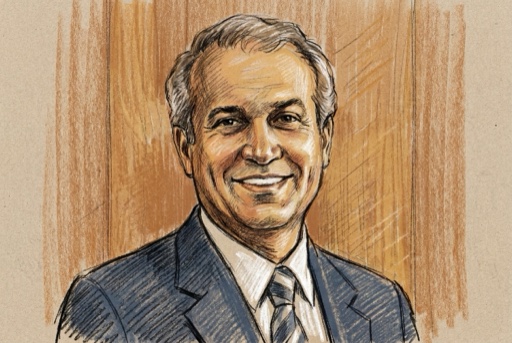
Abdulrahman al-Rashed
@aalrashed · Gulf & Arab world
Abdulrahman al-Rashed is a veteran Saudi columnist and former general manager of Al Arabiya.
#Yemen • In Al Jawf governorate, government forces are making progress today toward the capital, Al Hazm • Limited government advance in Marib, and the battles that have been ongoing since yesterday continue; the areas containing the oil sites remain under government forces’ control • The Houthis managed this Thursday afternoon to seize Al Mokha port, and Tariq Saleh’s forces announced that they are reorganizing their positions in the same area, while the French AFP says it was a tactical withdrawal. • The fall of Al Mokha has repercussions, and the question is where the Houthi militias will head by sea after taking control of the important port? • To the south, where Perim Island is, and thus from there a threat to international shipping in the strategic Bab al-Mandab Strait (a CNN correspondent visited the island) or • To the north in the Red Sea and control of the Zugar and Abu Ali islands (maps attached)
Translated from Arabic#اليمن Operations continue on several fronts, including the strategic Dhale front against Houthi control. Yemeni Defense Minister Taher al-Aqili was on this front with the governor and military commanders, and fierce clashes took place at dawn today. • The Yemeni air force, including drones, carried out strikes on Houthi reinforcements targeting command rooms and military gatherings • Infiltrating Houthi groups also launched attacks on the positions of the joint forces on fronts in Qatabah District. • On the front north of Qatabah, the forces repelled the attack and carried out a counterattack on the group's positions. The preceding weeks saw Houthi artillery and mortar shelling of residential areas, while the government previously carried out airstrikes on Houthi gatherings in Damt, killing members and destroying an ammunition depot
Translated from ArabicIsrael announces that it is ready for the third round of the war against Iran .. Tehran does not want to provoke Israel and has not attacked it since June 8. It did not intervene even at the height of Israel's targeting of Hezbollah in Lebanon and the fall of the group's main strongholds there. The Iranian attacks that came closest to Israeli airspace were directed against Jordan. Israel warned that it would enter the war if a missile reached it, even if by mistake .. and it was directed at Jordan. Why? Is Iran afraid of Israel, or does it realize that a confrontation with Israel would serve Netanyahu in the decisive election?
Translated from ArabicIt is difficult for Congress to overturn the Saudi-American nuclear agreement.
Translated from ArabicThe level of military confrontations in #Yemen has risen, and the dead number in the hundreds • The Houthis admitted carrying out more than 32 airstrikes on their positions in Taiz, Hudaydah, Al Jawf, and Marib. • The Houthis had launched missile and drone attacks on southern Saudi cities that struck 73 civilians. Today, air-raid sirens sounded in the southern Saudi cities without any attacks taking place. • Fighting continues on the western coast and in Taiz near Bab al-Mandab and Mokha, with repeated Houthi attempts to advance and attempts by government forces to retake positions they had previously lost. • President al-Alimi: In this round of Houthi escalation, thousands of civilians have been returned to displacement after years of relative calm. • Government forces have begun launching a counterattack toward Sana'a through Al Jawf and Al Bayda. • The international community, specifically the United States, which issued a statement to that effect, and Russia, through Foreign Minister Lavrov, agree on condemning the Houthis for their attack on Saudi Arabia
Translated from ArabicA field commander from the Yemeni Armed Forces persuades entrenched Houthi fighters to surrender and abandon their position in exchange for their safety. #Yemen The war has shifted from defending Taiz and Mokha to expanding the fronts against the Houthi militia. The battles have included • the western coast and the strategic governorate of Hudaydah, • and now the fight against the Houthis in Al Jawf Governorate, which borders Saudi Arabia and lies next to Saada Governorate, the Houthis’ birthplace, • and Marib Governorate, an important oil-producing area. • The clashes have extended to Lahij and Al Dhale’e, the gateway to the south.
Translated from ArabicMy article: The kidnapping of one thousand American soldiers! In a recently surfaced video, Mohsen Rezaei speaks about Iran kidnapping one thousand American soldiers and bargaining over them. The video is genuine, but I found that the statement is old, dating back to 2015. Today Rezaei is the right hand of the new Supreme Leader and serves as secretary of the Supreme National Security Council. Does Iran still imagine war with the same way of thinking? The confrontation has lasted a year, and it has not managed to arrest anyone or destroy a single warship; the human losses among the Americans are the lowest in the history of its wars. Iran's enemy is its excessive sense of power, which makes ideas such as continuing an unequal war, closing the straits, strangling the global economy, and bombing its neighbors seem like grand plans. The arrogance of power led Napoleon and Hitler to invade Russia and then suffer defeat. This sense of superiority may be justified among great powers, but it looks strange in countries of middling strength and a feeble economy. This is what makes it exult in unrealistic fantasies for consecutive decades, only to lose its entire first rank of leaders and most of its military capabilities at the first confrontation. It is strange that Iran's leadership believes it can defeat a great power so easily. Did the military leadership mislead Iran's political leaders? The events following the war show that their understanding of the world is not far removed from what a person suffering from megalomania, like Saddam Hussein in the 1980s and 1990s, used to imagine. Their perceptions of the balance of war do not match their abilities when facing the capabilities of two fierce enemies: America and Israel. For years, all their previous statements agreed on two conclusions: first, “America will not dare attack us,” and second, “If it does, it will be defeated”! One of Saddam's close associates recounts that, at a barbecue by the pool in Saddam's palace after the invasion of Kuwait, he asked him: Why did he not take precautions and be careful? He says: “Saddam replied sarcastically: You know they can see us with their satellites, and know that we are all here by the pool grilling meat? They are able to reach us, but they do not dare target me.” Because successive American administrations did not go to war with Iran, despite the attacks carried out or arranged by the Islamic Revolutionary Guard Corps that harmed its citizens and interests around the world, an impression arose among the leaders, clerics and military men alike, that Iran was protected from any attack by virtue of its growing military capabilities. Tehran's arrogant perceptions toward the United States may differ from their view of the much smaller Israeli power. They were always worried about the possibility of a war with it. This largely explains their insistence on carrying out their military nuclear program, because, as they imagine it, it is the weapon that will protect them from Israel. During the period before achieving the Iranian nuclear bomb, they established a broad regional belt to protect them from Israel, in Lebanon, Syria, Palestine, Yemen, and Iraq. Hezbollah leaders often repeated the mistaken conviction that these proxy camps would be sufficient to defend Iran if Israel dared to launch an attack, and that Israel would be destroyed. Superiority, dominance, success, and national pride were all embodied in one project: building a massive military force, until it became an Iranian obsession. It began directing the regime's policies and encouraging it toward further defiance: “Power makes its possessor imagine that he is capable of everything”! “Military superiority” made Tehran imagine that it could control and expand, impose political dominance, change regimes, or keep them in place. The echo of Iran's growing power reached every part of the world; it became the main supplier of lethal drones to a major state such as Russia in its war in Ukraine. It built thirty underground missile cities, produced tens of thousands of drones every month, more than American factories, dug into mountains for nuclear facilities, and carved hundreds of kilometers of underground tunnels to hide ballistic missiles. It began boasting about its families of missile products: “Fateh,” “Qiam,” “Shahab,” “Ghadr,” and “Sejjil.” Tehran reached a stage of thinking captured by the saying, “If you have a hammer, it is tempting to treat everything around you as nails”! This distorted intellectual euphoria was exposed in the war, along with the weakness of its defensive capabilities and the failure of its strategies to close the straits and suffocate world markets. Iran now knows that it is no match for America and Israel. Today its airspace is penetrated and its defenses are eroded, and it is no longer capable of causing harm except to neighbors less willing and less equipped for war than it is. Nevertheless, Iran has not yet changed its behavior or its narrative; with some humility, it has begun calling endurance a victory. It is true that the regime's survival is a victory for it, after the elimination of the first rank of its political and military leadership, the destruction of its offensive capabilities, and an unprecedented suffocating blockade. Will Iran's leaders think more realistically after all this? Precedent says ideological regimes do not follow the survival instincts known to natural systems; rather, they rarely learn their lesson ..
Translated from ArabicCENTCOM: The treatment will not be reciprocal: for every two American ships, three Iranian tankers.
Translated from Arabic@FaresALhemyari #اليمن "Desperate attempts by the Houthis to cut the main road linking the city of #تعز.. and the provisional capital Aden." President Rashad al-Alimi: @PresidentRashad The Houthi militias are the ones who chose this adventure, and they will bear its full consequences. "Taiz will not be a safe passage for the projects and agenda of its supporters, and it was the armed forces that confronted its attack and seized the initiative on the ground." He spoke about the latest developments in the operations, the gains on the ground, the level of combat readiness, and measures to consolidate and secure the liberated areas and clear the remaining positions into which the militias had infiltrated. The Yemeni president directed that the military missions continue, the initiative be maintained, and coordination among the various units and formations in the theater of operations be increased.
Translated from ArabicCENTCOM: Three Iranian oil tankers struck in response to the Islamic Revolutionary Guard Corps’ ballistic-missile attack yesterday toward two U.S. Navy warships patrolling the region
Translated from ArabicIran does not control Hormuz, as independent monitoring data and the large quantities of oil being shipped through the strait confirm. Our monitoring says that so far we have observed 17 ship-to-ship transfers of crude oil, liquefied natural gas (LNG), and liquefied petroleum gas (LPG), and that yesterday, September 4, 2026, at least 24 million barrels were shipped in the Gulf of Oman, in transit between vessels. The 24 million barrels figure represents the quantities currently exchanged between vessels, and does not mean that they are complete or new exports. The monitor says: We observed large numbers of other oil-laden tankers waiting for a “dance partner,” meaning to exchange oil with another tanker in those waters. It appears that the dance floor itself is the factor limiting these operations, not the Iranian threats, as the area is becoming increasingly congested, and port services are operating around the clock to ensure the transfer of the cargoes. In addition, we observed tankers carrying at least 7.25 million barrels, along with two additional liquefied natural gas tankers, gathering in preparation to cross the Strait of Hormuz into the Gulf of Oman, under the protection of U.S. Central Command. A busy day. #OOTT #IranWar #Tankers
Translated from ArabicAir power changed the equation against the Houthis. The fighting is at a new level between the government forces and the Houthi rebels.
Translated from ArabicThe Houthis had surprised everyone with their advance on the Taiz front when the militia launched a large-scale attack at dawn last Thursday. Reports say they used ballistic missiles, drones, and artillery, then carried out a ground assault. The Houthis made initial gains and temporarily seized some positions, and there is no explanation for this attack other than that it was intended to cut the road linking the city of Taiz with Mokha on the Red Sea. The armed forces launched a joint counteroffensive and recaptured most of the positions from the Houthis. Can government forces take the initiative and besiege the Houthi positions?
Translated from ArabicTwo historic events transformed Egyptian politics: Abdel Nasser: the Czechoslovak arms deal, with Czechoslovakia being one of the countries of the Soviet bloc, in 1955. It was the turning point toward Moscow and away from relations with Washington. Sadat: expelling the Soviet military advisers from Egypt in 1972, which marked the end of the strategic relationship with Moscow and the approach toward America. Sisi: The Egyptian president receives the Chinese president, and several agreements are signed while America is occupied with its war against Iran. Can this be read as a shift in Egyptian policy? That is unlikely, given the depth of the Egyptian relationship with Washington, and this does not contradict saying that the visit is an important advanced Chinese step in the region at Washington's expense. The most important thing the Chinese president said, in my view, was not what many quoted, be masters of yourselves, in a reference to encouraging the reduction of American influence. More important was what he said about China's readiness to cooperate in protecting the straits and sea lanes. This proposal is directed specifically against Iran.
Translated from ArabicThe project to transition to using driverless trucks in Saudi Arabia is a market of half a million trucks and one-third of a million drivers! It requires special routes and a huge communications network
Translated from ArabicIsrael finally admits that it was the one that assassinated General Muhammad Suleiman in Tartus, and he was spending his time at sea; the operation was carried out from a boat far offshore. “Al Arabiya” was the one that broadcast the news in 2008, and it was not known; the channel confirmed that the operation was Israeli despite Tel Aviv’s denial. The general was the personal liaison officer between Bashar al-Assad and Hassan Nasrallah
Translated from ArabicJafurah Could Make Saudi Arabia a Gas Exporter The Jafurah field represents Saudi Arabia’s biggest bet on unconventional gas, and as its output gradually rises over the coming years, the kingdom may become an exporter of liquefied natural gas. But before reaching that stage, Aramco is reportedly working with consulting firms to study building a flexible terminal that can operate in both directions: importing LNG when domestic supplies tighten, then later switching to exports as Jafurah production grows. The idea may seem strange; Saudi Arabia is the world’s largest oil exporter and also has the world’s sixth-largest gas reserves. So why does it need to import gas? @jackprandelli The reason is rising domestic demand: power generation, the petrochemical industry, desalination, and new data centers are all competing for gas supplies. Riyadh prefers using gas instead of burning oil, which is still used at some power plants, so that larger quantities can be made available for export. So far, the terminal’s location on either of the kingdom’s two coasts has not been decided: the Red Sea or the Gulf? The first option is near Yanbu, alongside the route of the East–West oil pipeline. This location gives Saudi Arabia an outlet that completely bypasses the Strait of Hormuz. The second option is the Gulf coast, where the terminal would be closer to the existing gas network and infrastructure, but would lie within the Strait of Hormuz’s zone. It is not merely a gas-import terminal, but a project that gives Saudi Arabia strategic flexibility: plugging any near-term domestic shortfall, then opening the door to exports when Jafurah supplies reach their anticipated levels later this decade.
Translated from ArabicWashington begins implementing its “tanker for tanker” policy in the Strait of Hormuz by bombing two Iranian tankers in response to “targeting two Saudi tankers.” The U.S. military bombed two Iranian government-owned oil tankers anchored off the Iranian coast late yesterday, Tuesday, in the first targeting of its kind of Iranian tankers in response to attacks attributed to Tehran against commercial tankers in the Strait of Hormuz. Washington now: blockade for closure, bombing in response to bombing, and every tanker for a tanker. Axios quoted officials as saying that Trump approved a new “tanker for tanker” policy (Tanker for Tanker), whose stated goal is to deter Tehran’s policy toward oil movement in Hormuz. CENTCOM confirmed in a separate statement that it carried out strikes on targets belonging to the Islamic Revolutionary Guard Corps in response to attempts to target commercial ships in the strait and U.S. bases in the region. Axios described what happened by saying that the two tankers were anchored north of the U.S. naval blockade line. Drones attacked them and hit the engine rooms. Yesterday, U.S. forces launched strikes on about 100 targets, including IRGC air-defense positions, radar systems, mine-laying capabilities, communications sites, anti-ship cruise-missile platforms, and attack-drone platforms. The goal is to reduce the danger to oil tankers and U.S. vessels. An official estimated that the strikes had “bought at least a month” of reducing the threat to commercial shipping. Dispute over the number of ships: Iran says only three tankers crossed the strait. A U.S. official said that about 40 ships crossed the strait entering and exiting on Tuesday (meaning twenty), carrying oil, and that U.S. forces intercepted cruise missiles and drones launched by the IRGC toward these ships without hitting any of them. Regarding the Iranian response, Washington said it had failed relatively: about 25 ballistic missiles, half of which reached Jordanian airspace, ten were intercepted, and three fell without causing injuries. Iran launched dozens of drones toward bases in Bahrain and Kuwait, and two drones toward Erbil; most were intercepted according to the American account. A U.S. official described the situation by saying that Iran “lost control of the Strait of Hormuz and lost control of the course of the conflict”
Translated from Arabic@arash_tehran This is what was reported from Hossein Marashi in his interview; he is one of the senior Iranian politicians (a reformist who was close to Rafsanjani) on the Aqua Iran channel: He said that the Chinese told us clearly: “You open the Strait of Hormuz, impose no fees, and resolve your problem with Saudi Arabia and America, and after that Qalibaf comes to China.” According to reports that carried the interview, the four conditions he mentioned are: 1That Iran open the Strait of Hormuz 2That it not charge any fees (on ships) 3Ending its disputes with Saudi Arabia 4Ending its disputes with America Then after that, Muhammad Baqer Qalibaf can be received in Beijing to pursue relations/the agreement with China.
Translated from Arabic72 hours created the succession... Khaddam admits his role in promoting Bashar after the death of Hafez al-Assad. On the evening of the very day of the death, Khaddam met with Bashar at his home and proposed promoting him to the rank of lieutenant general and appointing him commander-in-chief of the army and armed forces, “so that he would have a legitimate status in the state” before the referendum. Bashar asked him: “Shouldn’t General Mustafa Tlass’s opinion be sought?”, and he replied only: “It is possible to inform him of the decision”
Translated from ArabicConstruction is the sector where very significant change could occur. The number of workers in traditional construction is estimated at more than one million people; the modern construction model can reduce the number by a huge percentage and improve the quality of jobs and their salaries.
Translated from ArabicGiving Iranians the sense that they are facing change, and that their new system does not resemble the old system, absorbing the phase of anger after the war
Translated from ArabicPerhaps this is the first time that the rival claimants to power in Libya are on the verge of reaching an agreement, with a glimmer of hope for an end to the civil war. Libya has been divided into two Libyas since 2014: the western part of Libya: the Government of National Unity, headed by Dbeibah, based in the capital, Tripoli. And the eastern part of the country: Khalifa Haftar's military command and a parallel government in Benghazi. The importance of the agreement... 4+4: it is sponsored by the United Nations mission. Abdul Hamid Dbeibah and Saddam Haftar signed the agreement: Dbeibah representing western Libya and Haftar's son representing eastern Libya. Dbeibah and Saddam Haftar supported the committee's process and made political concessions this time. Key provisions of the agreement •Reconstituting the election administration board •Adopting the 2023 law for presidential elections, allowing military personnel and dual nationals to run. •Adopting the 2014 law for parliamentary elections as an individual-candidate system, with the possibility of parties participating through individual candidates. •Holding presidential and legislative elections within two years •This provision remains unclear... linking the holding of elections to unifying the executive authority, sovereign institutions, and the army as much as possible, with an alternative mechanism for proceeding to elections if full unification proves unsuccessful. •Rotating the locations of House of Representatives sessions among three cities: Tripoli, Benghazi, and Sabha
Translated from ArabicSaudi drones will be decisive in the battle for military manufacturing.
Translated from ArabicBrandeley: Aramco is still using the Strait of Hormuz. Saudi Aramco sold 4 million barrels of crude oil to China this month alone using a transshipment solution to cross the strait. Two very large crude carriers (VLCCs), Singapore Prosperity and Algeria Prosperity, loaded inside the Gulf, crossed the strait, and then transferred their cargo ship-to-ship off Sohar in Oman to two other tankers, Xin Hui Yang and Xin Han Yang, which are now heading to Ningbo and Zhanjiang, respectively, with both deliveries bound for Sinopec. Shipping data also show that Aramco is making the crossing with vessel-tracking devices turned off to reduce the likelihood of being targeted during the transit. This is the second consecutive week. It already sold at least 4 million barrels of the heavier grades (Arabian Medium and Arabian Heavy) last week. This type of sequence—loading inside the Gulf, crossing the strait, then switching ships on the other side—has become one of the most established ways producers use to keep barrels flowing without fully cutting volumes.
Translated from Arabic
Connected stories
- Jordan Intercepts 18 of 20 Iranian Missiles in Renewed Attack
- Iran Says It Will Create New Sanctions Zone Outside Strait of Hormuz
- Iran Claims It Targeted Six Vessels After U.S. Tanker Strikes
- U.S. Strikes Three Iranian Oil Tankers After IRGC Targets Navy Warships
- Hormuz Oil Flow Hits War-Era High of 17 Million Barrels, Wright Says
- Bahrain Says Air Defenses Intercepted Iranian Drones
- IRGC Claims Combined Missile-and-Drone Strikes on U.S. Bases in Erbil
- Jordan Intercepts 10 of 13 Iranian Ballistic Missiles, Reports No Casualties
- Kuwait Says Air Defenses Intercept Iranian Drone and Missile Attacks
- U.S. Forces Complete Wave of Strikes on IRGC Targets in Iran
- U.S. Strikes Two Iranian State Tankers Under New Retaliation Policy
- G20 Finance Chiefs Back Safe Hormuz Navigation, Except China