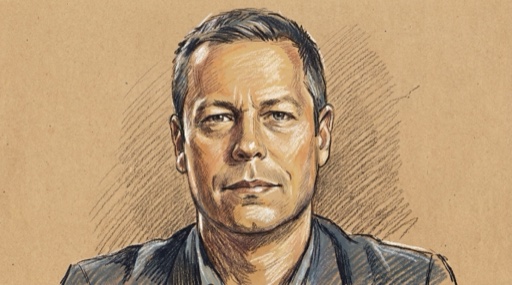
Raz Zimmt
@RZimmt · Israeli security analysts & ex-officials
Raz Zimmt is the Institute for National Security Studies' leading Iran expert, fluent in the regime's internal discourse.
And let us assume that it does indeed happen, and that, despite the frustration and despair felt by broad segments of the Iranian public traumatized after a year of two wars and the brutal suppression of protests, hundreds of thousands of Iranians once again take to the streets. Would that guarantee the collapse of the Iranian regime? Would it ensure that the regime agrees to surrender to U.S. demands? Would those hundreds of thousands be able to form an organized and effective protest movement capable of posing a significant threat to the regime’s stability? Would we see, this time, cracks and defections within the security forces and the IRGC sufficient to produce a different outcome from the one we witnessed in early January 2026? One can always hope, but wishful thinking is not a sound basis for strategy.
a. Israel has been operating in Ali al-Taher for several weeks. At this stage, there is no indication that Iran intends to respond to this activity. b. Iran has demonstrated over the past week a willingness to escalate its attacks in response to U.S. strikes in southern Iran. At the same time, even the Iranian response to this week’s unusual U.S. strike did not go beyond what Iran had done on previous occasions. This may indicate that, at this stage, Iran is not interested in further escalation, certainly not vis-à-vis Israel, since such escalation would not serve Tehran’s interests, particularly at the present time. c. There is no indication of the presence of “dozens of IRGC members,” let alone two senior Iranian officers, in Ali al-Taher. Israel, which in fact has an interest in demonstrating Iranian involvement in Hezbollah’s fighting, has denied that Iranian fighters are present there. d. There has been no unusual statement by senior Iranian officials indicating an intention to respond to Israeli activity in Ali al-Taher. Mohsen Rezaei, who was interviewed this week by Al-Manar, stressed that, from Iran’s perspective, Beirut and the Dahiyeh are red lines. He said nothing about Israeli activity in Ali al-Taher. Bottom line: It is clear that someone has an interest in constraining continued Israeli activity that threatens Hezbollah’s continued presence in Ali al-Taher and perhaps even in trying to pressure Iran to step up pressure over Israeli activity on the ridge. But I would treat the credibility of this report with considerable skepticism.
Iran’s economy is deteriorating fast. Will it force Tehran to compromise? | The Jerusalem Post https://t.co/m2JDTGIL0i
"Washington could fall into the same trap Tehran did after closing the Strait of Hormuz: overestimating a temporary achievement, excessive confidence, and assuming that time is necessarily on its side."
The resumption of direct military confrontation between the US and Iran provides further evidence that Tehran does not intend to easily relinquish the leverage over the Strait of Hormuz. My recent piece for @ynetnews https://t.co/4DmIditc12
The challenges facing the ambitious plan of the Iraqi government to dismantle the militias loyal to Tehran. A new article by Yaron Schneider at @INSS_Hebrew
Translated from HebrewIran still has the ability to escalate despite U.S. efforts to strike its capabilities. Washington may fall into the same trap Tehran fell into after the closure of the Strait of Hormuz: overestimating a temporary achievement and assuming that time necessarily works in its favor. My analysis at @ynetalerts
Translated from HebrewIsraeli Science and Technology Minister Gila Gamliel, who has developed a close diplomatic and public relationship with Reza Pahlavi, the exiled son of Iran’s last shah, fell from 25th to 35th place on the Likud Knesset slate following a revised count of the primary votes.
Former Iranian Foreign Minister Ali Akbar Salehi, responding in an interview with IBNA to a question about whether national interests should be secured through war or negotiations: "We should look at how the Prophet made decisions regarding peace and war. I believe that the Prophet reached the conquest of Mecca through the Treaty of Hudaybiyyah. Look at the approach he took when he was weak, how he acted in times of peace, and how he behaved when he was powerful. When the Prophet saw that confrontation was not possible, he accepted the Treaty of Hudaybiyyah. In other words, when you are weak, save yourself and those around you. Then go and build yourself up, become stronger, and return to conquer Mecca."
Iranian President Masoud Pezeshkian's son and political adviser, Yousef Pezeshkian: "I am not opposed to uranium enrichment and will accept whatever decision the Supreme National Security Council and the Supreme Leader make. My only point is that we need to understand the full implications of our decision and make it with full awareness. Our survival does not depend on uranium enrichment. If we do not enrich uranium, we will not die. Our nuclear energy program does not depend on uranium enrichment. Even today, the fuel for the Bushehr nuclear power plant is not produced domestically; it is imported from Russia. We have more important technologies without which our security and governance will suffer, yet we have no plans for them. Nor do we show the same degree of national sensitivity and determination toward them that we show when it comes to uranium enrichment."
Iran's President Pezeshkian, addressing IRIB chief Peyman Jebelli during a cabinet meeting: "When I turn on the television, I really have no desire to watch. If I, someone who wants to devote my life to the Islamic Republic, have come to feel this way, imagine how the public feels. I don't want to sound bitter, but I simply don't watch anymore. When I do, it gets on my nerves. More than ever, we need unity, cohesion, and a unified voice."
Iranian business activity has deep, mutually lucrative roots in Dubai and continues to thrive despite the American warnings https://t.co/aoWY8J3CI6 דרך @WSJ
Two Takeaways Instead of a Six-Month War Summary First, the Iran-U.S. confrontation is not a zero-sum game. The fact that the United States and Israel have so far failed to achieve their strategic objectives in the war, namely regime change, dismantling Iran’s nuclear program, and neutralizing its missile capabilities, did not make Iran the winner. Despite its achievements, foremost among them the closure of the Strait of Hormuz and its demonstration of an ability to inflict severe damage on its neighbors and the global economy, Iran emerged from the phase of high-intensity fighting with significant economic damage, badly damaged industries, a new leader struggling to consolidate his rule, and growing challenges to its ability to employ its proxies in the face of mounting pressure on them, for example in Lebanon and Iraq. By the same token, the fact that Iran now appears to be losing momentum, that the United States is succeeding in partially reopening the Strait of Hormuz, and that the naval blockade is exacting an increasingly heavy toll on Iran does not mean that the United States is winning. Even if U.S. military achievements ultimately make it possible to restore the status quo that prevailed in the Strait of Hormuz before the war, and even that remains far from certain, this does not change the fact that the war’s original strategic objectives have not been achieved, at least so far. Second, even if the phase of high-intensity warfare appears to be behind us, and that is by no means certain, it is still too early to sum up the war. Iran retains the ability to escalate the crisis in ways that could impose heavy costs on the United States, its neighbors, and the global economy. It is not clear why Iran is currently refraining from further escalation, whether this reflects operational constraints, a preference to give diplomacy another chance, or an assessment in Tehran that time is still on its side. Either way, Iran’s calculus could change quickly, and with it, the dynamics of the confrontation. Two conclusions follow. The first is that all of us need a considerable degree of analytical humility. Developments over the past several months demonstrate just how quickly the balance of achievements and setbacks on both sides can shift. We should therefore be prepared to reassess our previous judgments and avoid, as much as possible, simplistic, binary portrayals of “winners” and “losers.” The second is the need to guard against triumphalism and against overestimating the significance of temporary gains. Until recently, the Iranian leadership appeared to have fallen in love with its own victory narrative and with the belief that time was on its side. Now that the trend appears less favorable from Tehran’s perspective, Washington should be careful not to fall into the same trap. Recent U.S. achievements do not guarantee that Iran will capitulate to American demands, much less that the regime will collapse. In a conflict that has yet to be decided, what at one point appears to be a dramatic shift in the balance of power in favor of one side may ultimately prove to have been only a temporary advantage.
Turning into North Korea? The Growing Securitization of Iran | INSS https://t.co/f5UEUa4mIw
Turning into North Korea? The growing securitization in Iran. A short commentary of mine at @INSS_Hebrew
Translated from HebrewPakistan's interior minister meets with US envoy after talks in Tehran https://t.co/b8xCp8b3b4
Iranian Majlis Speaker Mohammad Bagher Qalibaf’s adviser, Mohammad Saeed Ahadian: “The new secretary of the Supreme National Security Council (Mohsen Rezaei) is also seeking the fulfillment of the same conditions outlined in the MOU, which the Supreme Leader emphasized in his message endorsing the agreement, what some have referred to as the ‘in-principle message.’”
During a meeting of the Iranian Parliament’s Energy Committee to discuss the country’s ongoing power outages, attended by the deputy energy minister and senior electricity-sector officials, the power went out at the meeting venue itself.
This refers to Mohsen Rezaei’s latest interview, in which he claimed that the American attack on Iran strengthened the motivation of countries around the world (not necessarily Iran specifically) to develop nuclear weapons, after it was proven that even international oversight mechanisms and membership in the NPT do not provide protection from a military attack. This is not exactly a “bomb threat,” but certainly another indication of the discourse taking place in Tehran around the lessons of the war in the context of the validity of the nuclear doctrine. I elaborated on this here
Translated from HebrewMore on the internal debate in Iran over its nuclear doctrine in my recent article for @INSSIsrael: https://t.co/ZdU3Xmazhm
It was my real pleasure to speak with @NegarMojtahedi on recent developments in Iran.
Trump is shifting from military pressure to an economic campaign against Iran; Tehran, however, sees surrendering to US demands as riskier than escalation that could trigger another round of fighting. My recent piece for @ynetnews https://t.co/Pu4tSLBUlo
Significant statements from Tehran today point to a growing recognition among the Iranian leadership of the severity of the economic situation and the erosion of Iran’s ability to use the Strait of Hormuz as leverage in light of U.S. military gains in opening a corridor through the strait. President Pezeshkian stressed that the government does not deny the shortages and that it would be better to end the war now, while Iran is in a position of strength and dignity and the entire world recognizes its victory. Majles Speaker Qalibaf stated that no matter how much military power Iran possesses, if the people are hungry, it will not be able to endure. Nevertheless, at this stage, there is still no indication that Iran is prepared to show flexibility and return to the MOU without preconditions, apart from its original demand for the lifting of the naval blockade and some sanctions relief. Tehran still appears to assess that, despite recent developments, it retains the ability to inflict significantly greater damage on the global economy and its Gulf neighbors, and that the price of a possible escalation (even to the point of renewed hostilities) is lower than the cost of yielding to U.S. demands and reopening Hormuz unconditionally in return for a temporary ceasefire that does not guarantee an end to the war and that, from Tehran’s perspective, could be terminated after the November midterm elections. Moreover, the ambiguous messages coming from the United States, including Treasury Secretary Bessent’s statement yesterday, in which he once again spoke about the collapse of the Iranian regime, could reinforce opposition in Tehran to any possible agreement. It is not clear that Tehran understands what the United States is prepared to offer Iran at this stage, particularly when President Trump himself appears confident that economic pressure can achieve what military pressure failed to accomplish. The bottom line, therefore, is that even if there is a growing recognition in Tehran that the current situation is not working in Iran’s favor, it is far from certain that this will be enough to build the necessary consensus—including among Ahmad Vahidi, Mohsen Rezaei, and more importantly Mojtaba Khamenei—to allow a change of course.
It appears President Trump has become convinced that returning to war does not guarantee a picture of victory. But in Tehran's view, surrendering to U.S. dictates and opening the Strait of Hormuz unconditionally in exchange for a ceasefire, which does not guarantee the removal of the threat of war, are more dangerous than an escalation that could lead to another round of fighting. My analysis at @ynetalerts
Translated from HebrewCommander of the Iranian General Staff's Committee for Locating Missing Persons: Three Iranian pilots, whose Sukhoi-24 aircraft were shot down during the war, have been held captive in Qatar for six months. So far, Qatar's government has not allowed their family members or the officials responsible for handling their case to meet with them. Under the Geneva Convention, the Red Cross must meet with them as soon as possible, check their health, and work toward their release.
Translated from Hebrew
Connected stories
- IDF Gains Operational Control of Ali Taher Ridge Above and Below Ground
- Iran Warned U.S. Against Israeli Assault on Ali Taher, Officials Say
- Qatar Warns Continued Hormuz Closure Risks Further Escalation
- Likud’s Final Recount Moves Eti Atia to 25th and Gila Gamliel to 35th
- U.S.-Israel War With Iran Reaches Six-Month Mark
- Pakistan Says Iran Talks Focused on Reopening Hormuz and Ending War
- Iranian Lawmaker Calls for NPT Withdrawal Over Trump Economic War
- Iran’s Foreign Minister Rejects Trump’s Economic Threat, Predicts More Failure
- Trump Declares 'Economic D-Day' on Iran, Warns Any Country That Aids Tehran
- U.S.-Iran War Memorandum Lapses Without a Deal as Tehran Denies Extension Talks
- U.S. Runs Covert Hormuz Tanker Corridor Moving 10 Million Barrels of Oil a Day
- Pezeshkian Calls for Ending Iran War While Claiming Victory